
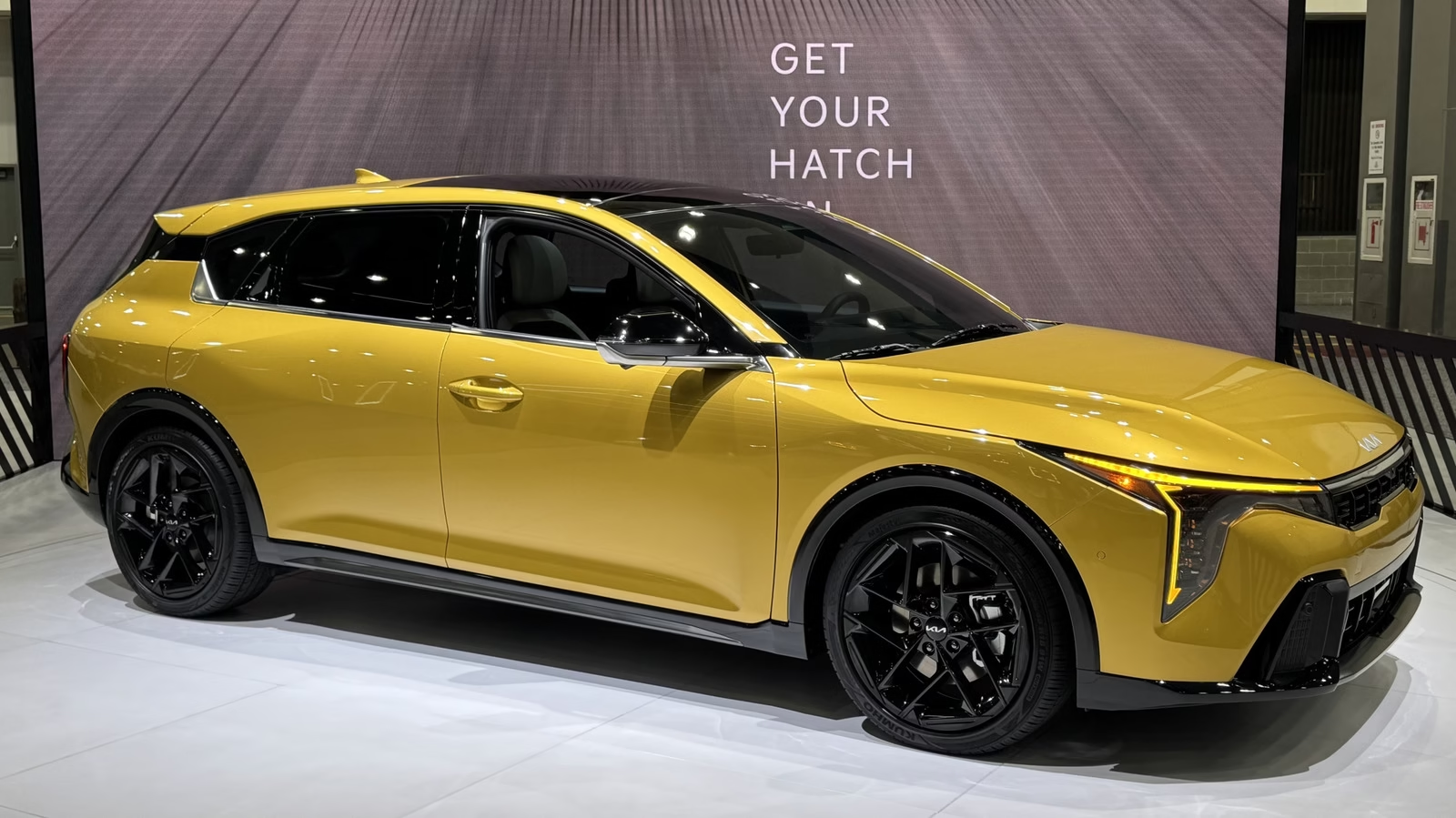
The automotive world loves a good classification debate, and the newly released 2026 Kia K4 Hatchback has sparked exactly that. Despite Kia clearly labeling this vehicle as a hatchback, some observers argue it should be considered an SUV due to its modern styling cues. This confusion reflects a broader industry trend where traditional vehicle categories have become increasingly blurred. However, when we examine the facts objectively, the K4 Hatchback firmly belongs in the hatchback category, regardless of current market preferences for crossovers and SUVs.
Understanding the Modern Hatchback Identity Crisis
The automotive landscape has dramatically shifted over the past two decades. Crossovers and SUVs now dominate sales charts, while traditional hatchbacks have seen their market share shrink considerably. This trend has led manufacturers to adopt design elements typically associated with SUVs – such as black plastic wheel arch cladding and slightly raised ride heights – to make hatchbacks appear more appealing to SUV-oriented consumers.
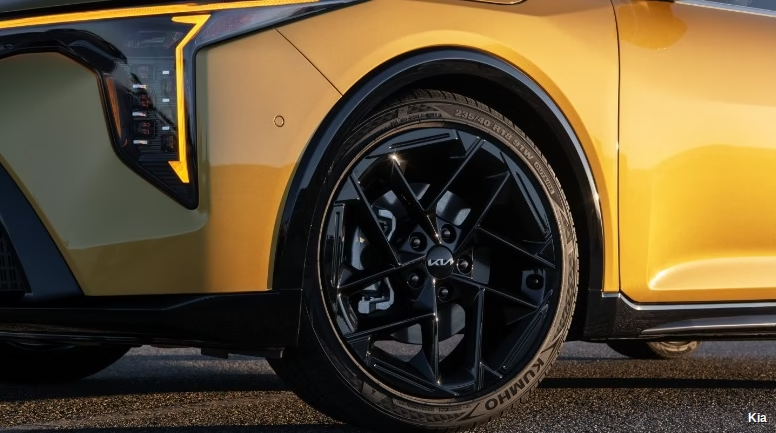
The Kia K4 Hatchback exemplifies this design philosophy. Its blacked-out wheel arches and contemporary styling might give it a crossover-like appearance from certain angles, but these aesthetic choices don’t fundamentally change what the vehicle actually is. It’s important to remember that the sedan version of the K4 features identical styling elements, yet nobody questions its classification as a traditional sedan.
Dimensional Analysis: Numbers Don’t Lie
When determining vehicle classification, dimensions provide the most objective criteria. The 2026 Kia K4 Hatchback measures 174.4 inches in length and stands just 56.3 inches tall – barely over 4.7 feet in height. These measurements place it squarely within traditional hatchback territory and far below typical crossover dimensions.
To provide context, let’s examine how the K4 Hatchback compares to its direct competitors in the hatchback segment:
Volkswagen Golf GTI: At 168.9 inches long, the GTI is actually shorter than the K4, while standing 57.7 inches tall – making it taller despite being the smallest vehicle in this comparison group.
Toyota Corolla Hatchback: This popular model measures 172 inches in length but stands 57.1 inches tall, making it both shorter and taller than the Kia.
Honda Civic Hatchback: The Civic represents the only competitor with a lower overall height than the K4 at approximately 56 inches, but it compensates with nearly five additional inches in length.
Mazda3 Hatchback: This premium-oriented hatchback shares similar proportions with the K4, reinforcing the Korean model’s place in this competitive segment.
Performance and Market Positioning
The K4 Hatchback’s market positioning further supports its hatchback classification. Kia clearly intends this vehicle to compete against established hatchback models rather than crossovers. The upcoming GT-Line Turbo variant specifically targets enthusiasts who might otherwise consider the Volkswagen Golf GTI – a comparison that would make no sense if the K4 were truly a crossover.
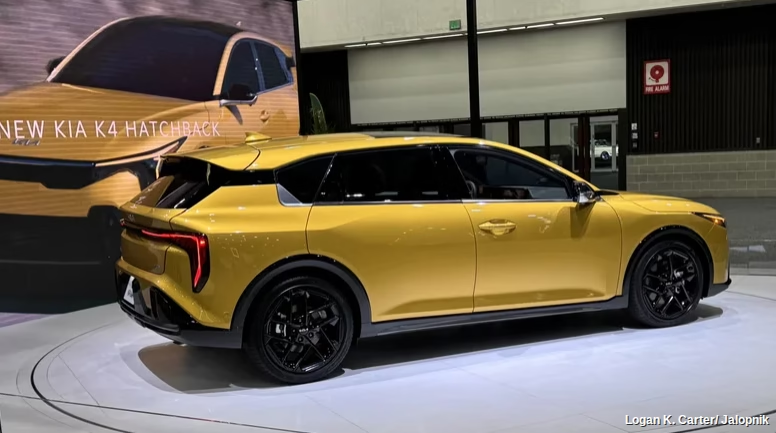
Front-wheel drive serves as the standard configuration, with available all-wheel drive on certain trim levels. This drivetrain approach aligns perfectly with hatchback conventions while providing additional capability for buyers who desire it. The power delivery and handling characteristics have been tuned to appeal to drivers seeking the engaging experience traditionally associated with well-executed hatchbacks.
The Arbitrary Nature of Modern Vehicle Classification
Today’s automotive marketplace has made vehicle classification increasingly subjective. Manufacturers often blur category lines to appeal to broader audiences, while marketing departments sometimes prioritize perception over accuracy. This trend has created confusion among consumers and automotive enthusiasts alike.
However, certain fundamental characteristics still matter when determining a vehicle’s true nature. Ground clearance, overall height, seating position, and intended use case all contribute to proper classification. The K4 Hatchback exhibits all the hallmarks of a traditional hatchback, despite incorporating modern design elements that might suggest otherwise at first glance.
Read more About: Why the 2025 Ford Bronco Sport Lease Deal at $399/Month Is a Total Steal (Limited Time!)
Why the Crossover Confusion Exists
Several factors contribute to the ongoing debate about the K4’s classification. Modern design language has evolved to incorporate SUV-inspired elements across multiple vehicle categories. Black plastic cladding, higher belt lines, and more upright proportions have become common even on traditional passenger cars.
Additionally, consumer preferences have shifted dramatically toward SUVs and crossovers, leading some observers to assume that any new vehicle with contemporary styling must belong to these popular categories. This assumption ignores the underlying engineering and proportional realities that truly define vehicle types.
Market Context and Competition
Understanding the K4 Hatchback’s place in the current market requires examining the broader context of hatchback sales and consumer preferences. While hatchbacks have lost significant market share to crossovers, dedicated manufacturers like Kia continue serving buyers who appreciate the benefits of traditional hatchback proportions and driving dynamics.
The compact hatchback segment remains viable, particularly among younger buyers and urban dwellers who value fuel efficiency, maneuverability, and affordability. The K4 Hatchback addresses these priorities while incorporating enough modern appeal to attract buyers who might otherwise gravitate toward small crossovers.
Technical Specifications That Matter
Beyond dimensions, several technical aspects reinforce the K4 Hatchback’s classification. The relatively low seating position provides a car-like driving experience rather than the elevated perspective associated with crossovers and SUVs. Cargo capacity and loading height align with hatchback expectations, offering practical utility without compromising the vehicle’s fundamental character.
Suspension tuning emphasizes on-road handling and comfort rather than off-road capability or high ground clearance. These engineering choices clearly indicate Kia’s intention to create a refined hatchback rather than a compromised crossover.
Frequently Asked Questions
Is the 2026 Kia K4 Hatchback considered an SUV?
No, despite some crossover-inspired styling elements, the K4 Hatchback is classified as a traditional hatchback based on its dimensions, driving position, and intended market segment.
How does the K4 Hatchback compare in size to other hatchbacks?
At 174.4 inches long and 56.3 inches tall, the K4 Hatchback fits well within the compact hatchback segment, competing directly with models like the Honda Civic Hatchback and Toyota Corolla Hatchback.
What makes the K4 look like a crossover to some people?
The black plastic wheel arch cladding and contemporary design language incorporate elements commonly associated with crossovers, but these are purely aesthetic choices that don’t change the vehicle’s fundamental classification.
Does the K4 Hatchback offer all-wheel drive?
Yes, all-wheel drive is available on certain trim levels, though front-wheel drive remains the standard configuration across most of the lineup.
Who are the main competitors to the K4 Hatchback?
Primary competitors include the Honda Civic Hatchback, Toyota Corolla Hatchback, Mazda3 Hatchback, and Volkswagen Golf GTI, all of which are established hatchback models.
Final Thoughts on Automotive Classification
The 2026 Kia K4 Hatchback represents everything positive about modern hatchback design without abandoning the fundamental characteristics that define the category. While automotive classification has become increasingly fluid in recent years, some distinctions remain meaningful and important.
Calling the K4 Hatchback an SUV or crossover ignores objective dimensional data, market positioning, and engineering priorities that clearly identify it as a hatchback. The vehicle’s name, specifications, and intended competition all support this classification, regardless of styling elements that might suggest otherwise.
As the automotive industry continues evolving, maintaining clarity about vehicle classifications helps consumers make informed decisions and preserves the distinct characteristics that make different vehicle types appealing to their respective audiences. The K4 Hatchback deserves recognition as a well-executed modern hatchback rather than being misidentified due to contemporary design trends or market preferences for crossovers.
1 thought on “2026 Kia K4 Hatchback: Why It’s a True Hatchback, Not Another Crossover Pretender”
Comments are closed.