
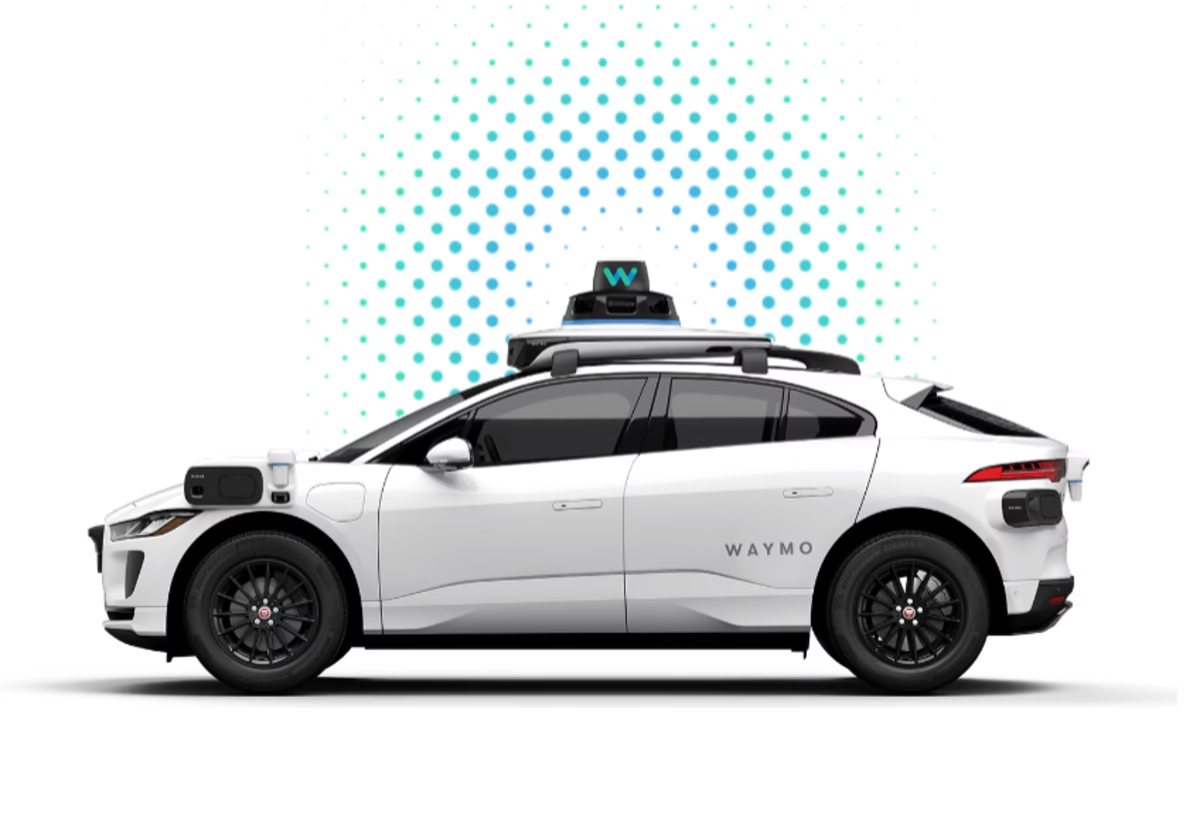
What Is Waymo?
Hey there, if you’ve been keeping an eye on the auto industry lately, you’ve probably noticed Waymo popping up everywhere. As someone who’s fascinated by how tech is reshaping our daily lives, I have to say: Waymo isn’t just another ride-hailing app—it’s a game-changer in autonomous vehicles. Owned by Alphabet (that’s Google’s parent company), Waymo is leading the charge in driverless cars, and right now, it’s trending big time in the USA. With self-driving tech advancing faster than ever, 2025 feels like the year when robotaxis go mainstream. Let’s dive into what Waymo is all about, why it’s blowing up, and what the future holds.
Waymo started as Google’s self-driving car project back in 2009 and spun off into its own company in 2016. Today, it’s all about the Waymo One service—a fully autonomous ride-hailing platform where you hop into a car with no human driver. These vehicles use a mix of advanced AI, sensors, cameras, lidar, and radar to navigate city streets safely. No steering wheel intervention needed; just punch in your destination via the app, and off you go. And get this: Waymo’s cars are mostly Jaguar I-PACE electric SUVs, built right here in the US at their integration plant in Metro Phoenix, scaling up production to meet demand.
Read More: Best Auto Insurance Quote in 2025 – Save Money on Your Car Coverage
Why Is Waymo Trending in 2025?
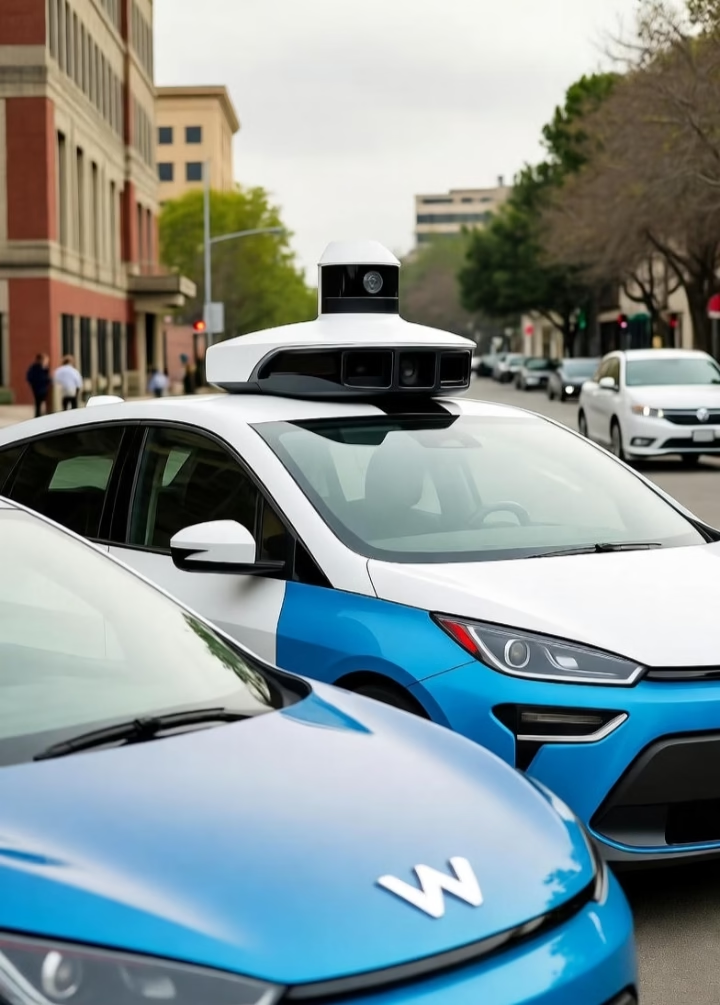
So, why is Waymo trending so hard in 2025? Well, the numbers tell the story. As of October 2025, Waymo is serving over 10 million rides total, with rider satisfaction hitting 93% based on 4- and 5-star reviews. In California alone, they’re clocking about 1 million paid driverless trips a month—that’s roughly 250,000 rides per week, a massive jump from just 10,000 weekly rides back in August 2023. This growth is fueled by expansions into key cities. Right now, Waymo One is fully operational 24/7 in Phoenix (covering 315 square miles), San Francisco (including Daly City), Los Angeles (from Santa Monica to downtown), Austin, and Atlanta.
The buzz isn’t just about convenience; it’s about real-world impact. Partnerships are key here—Waymo’s working with DoorDash for deliveries in Arizona and exploring more integrations. In Austin and Atlanta, they’ve teamed up with Uber, so you can book a Waymo ride right through the Uber app, making it super accessible.
Safety and Innovations in Waymo’s Tech
And safety? That’s where Waymo shines. Their vehicles have logged over 96 million rider-only miles without a human driver, showing 91% fewer crashes involving serious injuries compared to human-driven cars in the same areas. That’s huge, especially when you consider US roads see about 42,500 fatalities a year. Waymo’s tech is designed to cut that down, using AI that predicts and avoids hazards better than we humans can on a bad day. Plus, with electric vehicles in the fleet, it’s a win for the environment, reducing emissions and promoting sustainable transport.
Challenges and Controversies
Of course, it’s not all smooth sailing. There have been hiccups, like traffic incidents in San Francisco where Waymo cars blocked intersections or caused minor delays. Some folks are hesitant about trusting a machine with their commute, and regulatory hurdles slow things down. Plus, each Waymo vehicle costs over $120,000 thanks to all that fancy hardware, though costs are dropping with their sixth-gen driver in the works. Competitors like Tesla are pushing their Full Self-Driving tech, with some users claiming it beats Waymo in speed on certain routes. But Waymo’s focus on Level 4 autonomy (fully driverless in geofenced areas) gives it an edge in reliability over Tesla’s supervised system.
The Future of Waymo and Autonomous Driving
Looking ahead, Waymo’s expansion plans are ambitious. They’re testing in New York City, with permits for Manhattan and Brooklyn, and eyeing 10 more cities this year alone. Miami and Washington, D.C., are next on the list for full operations, followed by Dallas, Denver, Seattle, Nashville, and even international spots like London. Analysts predict Waymo could hit 500,000 weekly rides by year-end 2025, scaling to a whopping 8 million per week by 2030—a 99% compound annual growth rate. That could snag them 10% of the US rideshare market, potentially eating into Uber and Lyft’s shares. Imagine: by 2030, Waymo might cover 57% of US rideshare demand, up from just 9% today.
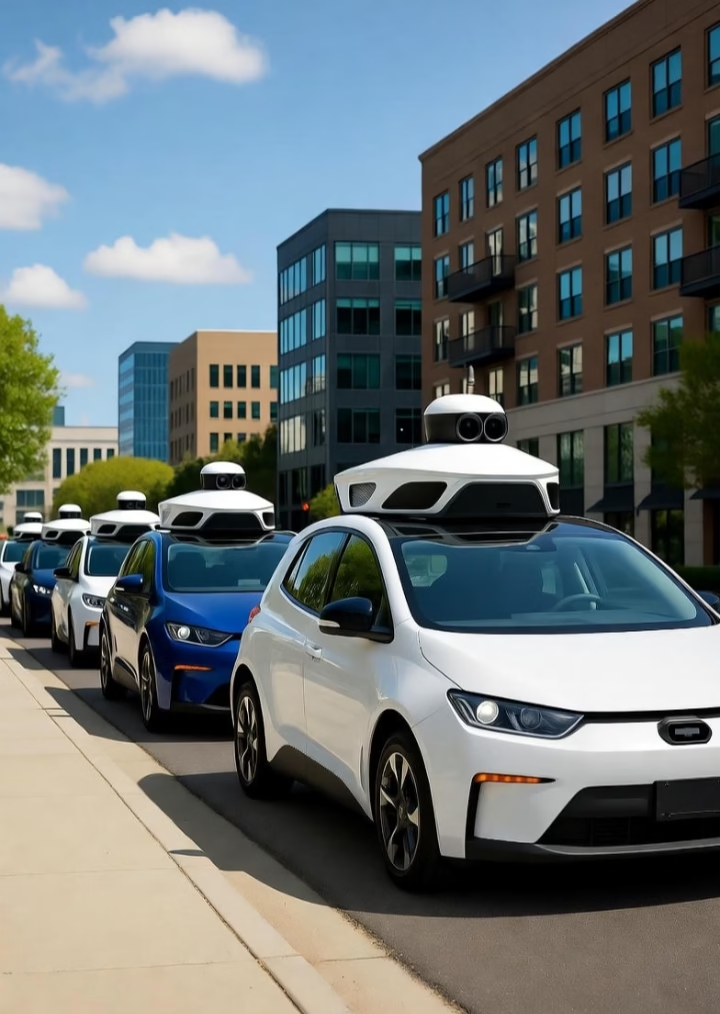
This isn’t just about getting from A to B; it’s transforming cities. Fewer private cars mean less traffic, more parking space turned into parks, and a big win for the environment with electric fleets cutting emissions. Sure, it might disrupt jobs in driving, but it could save lives and free up time—think working or relaxing during your commute.
In a nutshell, Waymo is proving that autonomous driving is here and thriving in 2025. If you’re in one of their cities, give it a try; users rave about the peaceful rides. As tech evolves, expect even more innovations. The road ahead looks exciting—literally driverless. What do you think: ready to let AI take the wheel?
FAQ
Is Waymo safe to ride in?
Absolutely, Waymo prioritizes safety with over 96 million rider-only miles driven and 91% fewer serious injury crashes than human drivers. Their AI handles complex situations better than average drivers.
Where is Waymo available right now?
Waymo operates 24/7 in Phoenix, San Francisco, Los Angeles, Austin, and Atlanta, with expansions planned for more cities like Miami and NYC.
How does Waymo compare to Tesla’s self-driving tech?
Waymo offers fully driverless Level 4 autonomy in specific areas, while Tesla’s Full Self-Driving requires supervision. Waymo edges out in reliability for urban rides.
Can I book a Waymo ride through other apps?
Yes, in Austin and Atlanta, you can book via Uber. They also partner with DoorDash for deliveries.
What’s next for Waymo in 2026 and beyond?
Expect launches in Dallas, Denver, Seattle, and more, with potential international growth. Ridership could skyrocket to 8 million weekly rides by 2030.