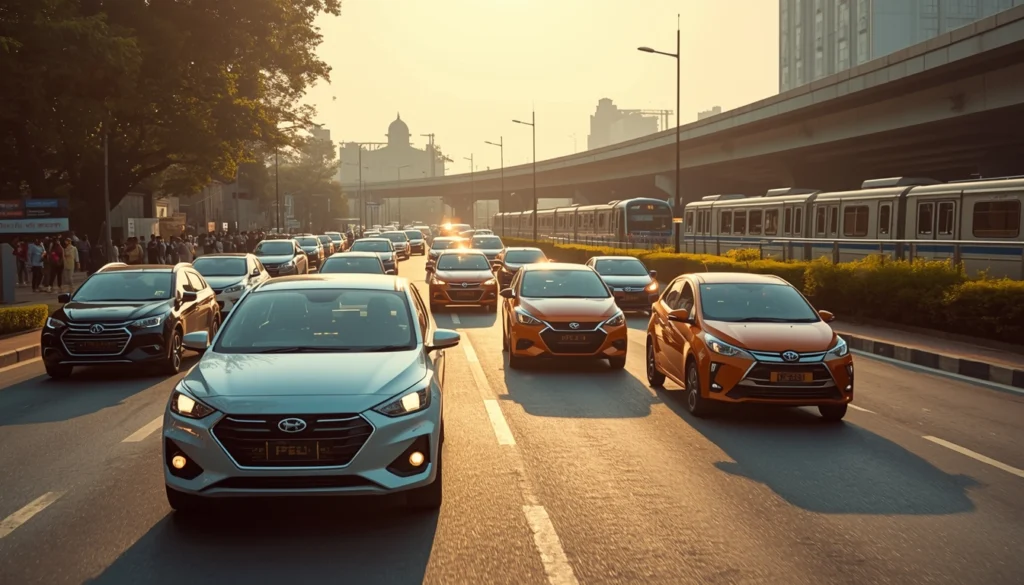
Here’s a number that might keep you up at night: the average Delhi NCR commuter spends over 2 hours daily stuck in traffic, covering anywhere between 30 to 60 kilometres. That’s roughly 15,000 kilometres a year just getting to work and back. If your car guzzles fuel or rattles your spine on every pothole between Noida and Gurgaon, that commute isn’t just exhausting—it’s burning a hole in your wallet.
With diesel cars losing popularity in the NCR region (thanks to the Supreme Court’s intermittent diesel bans and stricter BS-VI norms), petrol cars have made a strong comeback as the sensible choice for daily commuters. But with over 40 petrol models fighting for your attention—from budget hatchbacks to turbocharged SUVs—figuring out the best petrol car for your specific commute is anything but simple.
In this guide, we’ll cut through the marketing noise and help you find the best petrol car for your daily grind in Delhi NCR. Whether you’re a software engineer in Gurgaon’s Cyber City, a small business owner in East Delhi, or a government employee in Noida, we’ve compared real-world mileage, ownership costs, safety ratings, and resale value—everything that actually matters on NCR’s roads.
| 72% of new car sales in Delhi NCR in 2025 were petrol variantsSource: FADA (Federation of Automobile Dealers Associations) Annual Report 2025 |
Why Petrol Cars Are the Smartest Choice for Delhi NCR Commuters in 2026
The Delhi NCR car market has shifted dramatically in the last three years. If someone told you to buy a diesel car for city commuting five years ago, they weren’t wrong—back then, diesel was significantly cheaper. But the equation has flipped entirely.
The Diesel vs Petrol Debate Is Settled
The price gap between petrol and diesel fuel in Delhi has narrowed to just ₹2–4 per litre as of early 2026. Meanwhile, diesel car variants cost ₹1.5–2 lakh more upfront than their petrol counterparts. For someone driving 15,000–20,000 km per year, a fuel-efficient petrol car comfortably wins the total cost-of-ownership battle. Add to that the periodic diesel vehicle bans in NCR during winter pollution spikes, and you have a clear winner.
Lower Maintenance, Fewer Headaches
Petrol engines are mechanically simpler than diesel engines. There’s no turbocharger to worry about on most naturally aspirated petrol cars, the exhaust system is less complex, and service intervals are typically cheaper by 15–25%. For a daily commuter who just wants a low maintenance petrol car that starts every morning without drama, petrol is the way to go.
Better Resale Value in the Current Market
With uncertainty around diesel vehicle registration in NCR (the National Green Tribunal has imposed restrictions on diesel vehicles older than 10 years), petrol cars are fetching 8–12% higher resale value in the used car market. Platforms like Spinny, Cars24, and OLX show that petrol variants sell 40% faster than diesel equivalents in the NCR region.
Top 8 Petrol Cars for Daily Commute in Delhi NCR – The Complete Comparison
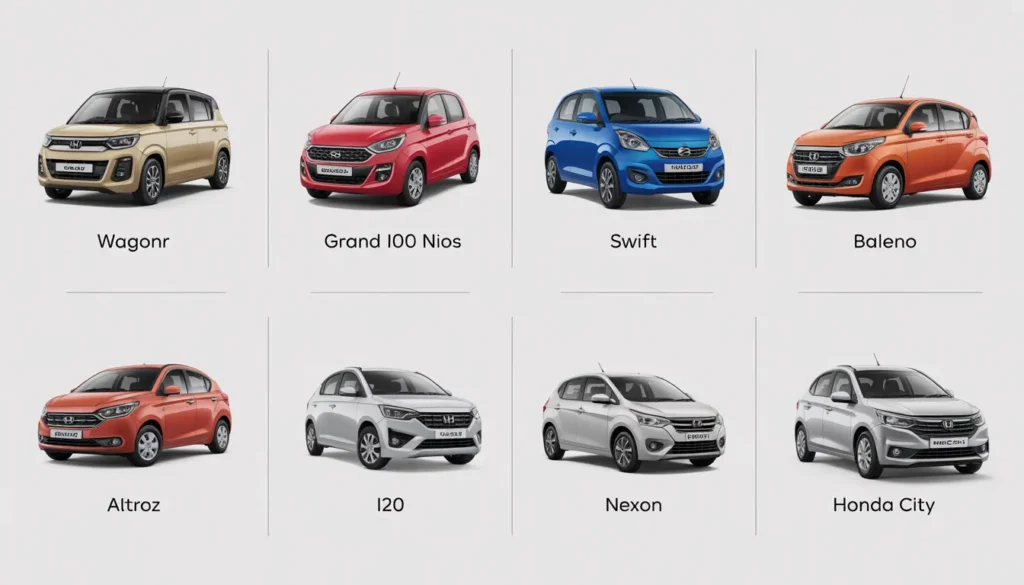
We’ve analysed dozens of models and narrowed down the best petrol car options across three budget segments. Here’s our curated list based on real-world petrol car mileage, ownership costs, safety, and suitability for Delhi NCR roads.
| Car Model | Price (Ex-Delhi) | Mileage (ARAI) | Engine | Best For |
| Maruti WagonR | ₹5.54-7.42L | 24.35-25.19 km/l | 1.0L/1.2L | Budget Commute |
| Hyundai i10 Nios | ₹5.64-8.56L | 20.7 km/l | 1.2L Petrol | City & Parking |
| Maruti Swift | ₹6.49-9.64L | 22.56-24.80 km/l | 1.2L Z-Series | Fun Driving |
| Maruti Baleno | ₹6.61-9.88L | 22.35-22.94 km/l | 1.2L DualJet | Families |
| Tata Altroz | ₹6.60-10.74L | 22.07 km/l | 1.2L Petrol | Safety-First |
| Hyundai i20 | ₹7.04-11.21L | 20.35 km/l | 1.2L Petrol | Premium Cabin |
| Tata Nexon | ₹7.99-14.30L | 17.33 km/l | 1.2L Turbo | SUV on Budget |
| Honda City | ₹11.82-15.62L | 18.4 km/l | 1.5L i-VTEC | Premium Sedan |
Note: Prices are ex-showroom Delhi as of March 2026. On-road prices will be 10–15% higher depending on registration and insurance.
Best Budget Petrol Cars Under ₹8 Lakh for NCR City Commute
Maruti Suzuki WagonR – The Unshakeable King of Practicality
There’s a reason the WagonR has been India’s bestselling car for years. Its tall-boy design means you sit higher, which is a genuine comfort advantage in bumper-to-bumper traffic on the Delhi–Meerut Expressway or the nightmare that is MG Road, Gurgaon. The 1.0-litre engine is perfect for petrol car for city driving—peppy enough below 80 km/h and delivering a real-world mileage of 18–20 km/l in NCR traffic.
Real User Story: Rajesh Sharma, a chartered accountant from Laxmi Nagar, switched from a Hyundai Xcent diesel to a WagonR AMT in 2024. He reports saving approximately ₹4,200 per month on fuel and maintenance for his daily 35 km commute to Connaught Place.
Hyundai Grand i10 Nios – Premium Feel Without the Premium Price
If the WagonR feels too utilitarian for your taste, the Grand i10 Nios strikes the sweet spot between affordability and refinement. Its compact footprint makes it a dream to park in crowded markets like Sarojini Nagar or Lajpat Nagar. Wireless Android Auto and Apple CarPlay come standard on mid-variants—a genuine quality-of-life upgrade for navigation through NCR’s ever-changing road diversions.
| ₹1.2 – 1.5 per kmAverage running cost of a budget affordable petrol hatchback in Delhi NCR stop-and-go traffic |
Mid-Range Petrol Cars Between ₹8–12 Lakh: Where Value Meets Performance
Maruti Suzuki Baleno – The All-Rounder for Families
The Baleno has quietly become the default choice for young families in NCR’s satellite cities—Greater Noida, Faridabad, and Ghaziabad. Its boot space (318 litres) is genuinely usable, the rear seat is comfortable for three adults, and the 1.2-litre DualJet engine with idle start-stop returns impressive real-world figures of 17–19 km/l even in heavy traffic.
Case Study: Priya Mehta, a school teacher in Indirapuram, bought a Baleno Alpha AMT for her 22 km daily commute to Vasundhara. After 18 months and 27,000 km, her total maintenance cost has been just ₹18,500—including three services and a tyre rotation. She specifically chose AMT to avoid clutch fatigue in traffic.
Hyundai i20 – For Those Who Want the Best Cabin Experience
The i20 is where you go when you want your daily commute to feel less like a chore and more like a cocoon. It has the best-in-class infotainment system, a sunroof option, and connected car features through Hyundai’s BlueLink app. The ride quality on broken NCR roads is noticeably better than the Baleno, though it costs about ₹1 lakh more for a comparable variant.
Tata Altroz – The Safety Champion
If your commute involves highway stretches—say the Delhi–Jaipur Expressway or Noida–Greater Noida Expressway—the Altroz deserves serious consideration. It’s the only car in this segment with a 5-star Global NCAP safety rating. The build quality is tank-like, and you genuinely feel safer during aggressive NCR traffic. The trade-off? The AMT gearbox isn’t as smooth as Maruti’s, and the infotainment could be snappier.
Maruti Suzuki Swift – The Fun Factor
The 2024-refreshed Swift with its new Z-series engine has addressed the one complaint enthusiasts had: fuel efficiency. It now delivers 19–22 km/l in real-world conditions while being the most engaging car to drive in this segment. If your commute includes open stretches where you can enjoy the drive, the Swift adds a smile that others can’t match. It’s genuinely the best mileage car India has in the fun-to-drive hatchback space.
Premium Petrol Options Above ₹12 Lakh: When Your Commute Deserves an Upgrade
Honda City – The Compact Petrol Sedan That Refuses to Age
For professionals with slightly longer commutes—think Gurgaon to Central Delhi or Noida to Aerocity—the Honda City remains unbeatable in the sedan space. The 1.5-litre i-VTEC engine is silky smooth, the ride quality insulates you from NCR’s road imperfections, and the rear seat is comfortable enough for your parents or in-laws when weekend family duties call. Mileage drops to 13–15 km/l in heavy traffic, but the overall refinement justifies the premium.
Tata Nexon Petrol – The SUV That Makes Sense
NCR roads can be brutal—potholes, speed breakers, waterlogging during monsoons. The Nexon’s 190mm ground clearance and sturdy suspension handle all of this without fuss. Its 1.2-litre turbo petrol engine feels genuinely quick, making highway merges and expressway overtakes confident.
Case Study: Amit Verma, a startup founder in Gurgaon’s Udyog Vihar, drives a Nexon XZA+ for his daily commute from Dwarka. He chose it specifically for monsoon-readiness after his previous sedan got stuck in Gurgaon’s infamous waterlogging near Hero Honda Chowk. After two monsoon seasons, he reports zero issues.
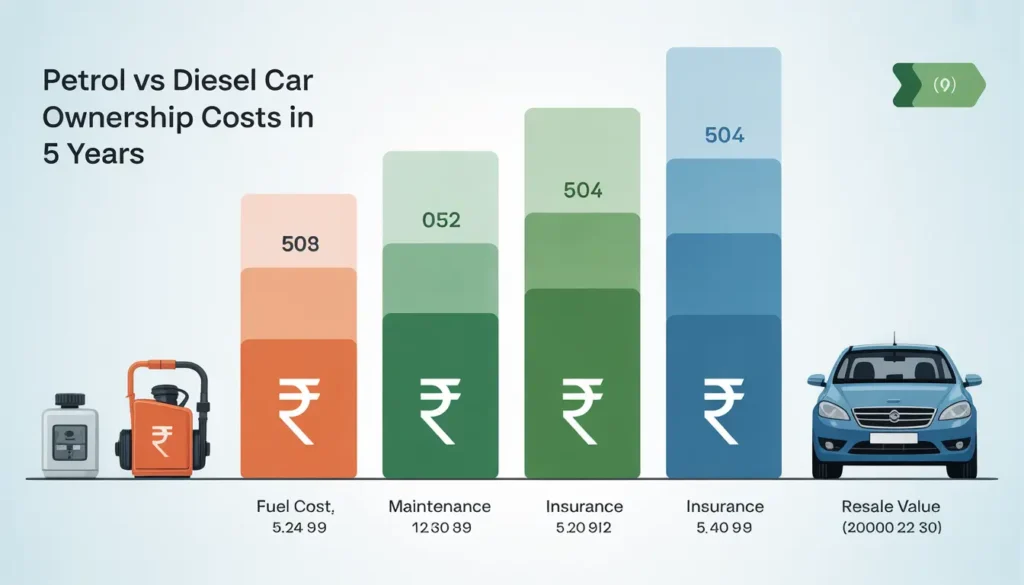
The Real Cost of Owning a Petrol Car in Delhi NCR: Breaking Down the Numbers
Buying a car is just the first expense. Here’s what the actual cost of ownership looks like over 5 years for a mid-range petrol car under 10 lakhs in Delhi NCR.
| Cost Component | Estimated 5-Year Cost |
| Car Purchase (On-Road, Delhi) | ₹9.5 – 12 Lakh |
| Fuel (15,000 km/yr @ ₹105/L) | ₹3.9 – 4.7 Lakh |
| Insurance (Comprehensive) | ₹1.2 – 1.8 Lakh |
| Maintenance & Servicing | ₹0.8 – 1.2 Lakh |
| Parking (if rented in NCR) | ₹0.6 – 1.5 Lakh |
| Toll Charges (FASTag) | ₹0.3 – 0.6 Lakh |
| TOTAL 5-Year Cost | ₹16.3 – 21.8 Lakh |
| Resale Value (After 5 yrs) | ₹4.5 – 6.5 Lakh |
Pro Tip: If you drive less than 10,000 km per year, consider third-party insurance after the first year. It can save you ₹8,000–15,000 annually on a mid-range affordable petrol hatchback.
Delhi NCR–Specific Factors You Must Consider Before Buying
Pollution and Odd-Even Rules
Delhi periodically enforces Odd-Even vehicle rationing during pollution emergencies. While this applies to all cars, CNG-fitted petrol cars are exempt. Several models like the WagonR, Swift, and Baleno offer factory-fitted CNG options. If you want the flexibility of petrol performance with a CNG backup for restricted days, a dual-fuel option is worth the extra ₹90,000–1 lakh.
Parking Nightmares: Size Matters in the NCR
If you’re parking in Old Delhi, Chandni Chowk, or any congested South Delhi colony, a sub-4-metre car is practically mandatory. The WagonR, Grand i10 Nios, and Swift are all under 3.9 metres and can squeeze into spots that would give a Creta driver nightmares.
Monsoon Readiness and Waterlogging
NCR’s monsoon waterlogging is legendary—especially in Gurgaon (Sector 29 underpass, anyone?) and parts of East Delhi. If your commute route is prone to water accumulation, prioritize ground clearance. The Nexon (190mm) and WagonR (180mm) handle waterlogged stretches far better than the low-slung Baleno (170mm) or Honda City (165mm).
Highway vs City Commute Split
If more than 40% of your daily driving is on expressways (Noida–Greater Noida, Delhi–Meerut, Dwarka Expressway), consider the Altroz, i20, or Honda City for their superior highway stability. Pure city commuters should prioritize AMT/CVT transmissions and tight turning radius—the WagonR and Swift excel here as a Delhi NCR commute car.
Government Incentives and Financing Options for Car Buyers in Delhi NCR
Vehicle Scrappage Policy Benefits
Under the Government of India’s Vehicle Scrappage Policy, if you’re scrapping a vehicle older than 15 years, you can get a rebate of up to 25% on road tax when registering your new petrol car in Delhi. For a car with an on-road price of ₹10 lakh, this could save you ₹20,000–25,000.
Best Car Loan Rates in Delhi NCR (March 2026)
SBI and Bank of Baroda currently offer car loan rates starting at 8.5% for salaried individuals. HDFC Bank and ICICI Bank offer slightly higher rates at 8.75–9.25% but with faster processing. For self-employed individuals in NCR, Axis Bank’s car loan at 9.0% with minimal documentation is a popular choice. Most dealers also offer zero-downpayment schemes during festive seasons, though we’d recommend putting down at least 20% to keep EMIs manageable.
Insurance Hacks for NCR Car Owners
Delhi NCR has among the highest motor insurance premiums in India due to high theft and accident rates. Online aggregators like PolicyBazaar and Coverfox typically offer 15–20% lower premiums than dealer-bundled insurance. For an affordable petrol hatchback like the Baleno, expect to pay ₹18,000–22,000 annually for comprehensive insurance.
Our Final Verdict: Which Best Petrol Car Should You Buy in Delhi NCR?
After analysing dozens of data points, real-world usage patterns, and actual owner experiences across Delhi NCR, here’s our recommendation:
For budget-conscious commuters (under ₹8 lakh): The Maruti Suzuki WagonR remains the best petrol car in this segment. Its unbeatable mileage, low maintenance costs, and massive service network across NCR make it the rational choice.
For best value-for-money (₹8–12 lakh): The Baleno for efficiency, the Altroz for safety, or the i20 for cabin quality.
For premium comfort (above ₹12 lakh): The Honda City for sedan lovers, or the Tata Nexon for SUV practicality without the running costs going through the roof.
The best petrol car for your daily commute isn’t necessarily the one with the fanciest features—it’s the one that matches your specific route, your five-year budget, and your non-negotiable requirements. Test drive at least three options from our list, calculate your true ownership costs, and make a decision you’ll be happy with for the next five to seven years.
Ready to take the next step? Visit your nearest authorised dealership in Delhi NCR for a test drive. Most dealers now offer home test drives too—just call and ask.
Frequently Asked Questions: Best Petrol Car for Delhi NCR Commute
Q: Which is the best petrol car for daily office commute in Delhi NCR?
A: For most daily commuters covering 20–40 km in Delhi NCR traffic, the Maruti Suzuki WagonR (budget) or Baleno (mid-range) offer the best balance of fuel efficiency, low maintenance, and comfort. If your route includes expressway stretches, consider the Tata Altroz for its superior safety or the Hyundai i20 for highway stability. The choice depends on your budget, parking constraints, and whether you prefer automatic or manual transmission.
Q: What is the real-world mileage of petrol cars in Delhi NCR traffic?
A: In typical Delhi NCR stop-and-go traffic, expect 15–25% lower mileage than ARAI-certified figures. A Maruti WagonR claiming 25 km/l delivers around 18–20 km/l in real conditions. The Baleno gives 17–19 km/l, the Swift 18–21 km/l, and the Nexon delivers 12–14 km/l. Highway mileage is typically 15–20% better. AMT and CVT automatics deliver marginally lower mileage (1–2 km/l less) than manual variants.
Q: Should I buy a petrol or CNG car for Delhi NCR commuting?
A: If you drive more than 20,000 km per year in mostly city driving, CNG makes financial sense—fuel costs drop by nearly 50%. However, CNG cars have reduced boot space, slightly less power, and require planning around CNG station availability. For commutes under 15,000 km annually, a petrol car is more convenient with better resale value. A smart middle ground is a petrol car with factory-fitted CNG kit (available on WagonR, Swift, Baleno).
Q: Is an automatic petrol car worth it for Delhi NCR traffic?
A: Absolutely. If your commute involves more than 30 minutes of bumper-to-bumper traffic daily, an AMT or CVT automatic will significantly reduce fatigue. The WagonR AGS, Baleno AMT, and i20 IVT are excellent options. The extra ₹50,000–1 lakh for automatic is well worth it for NCR conditions. Modern automatics are comparable to manuals in fuel efficiency, with only 1–2 km/l difference.
Q: How much does it cost per month to run a petrol car in Delhi NCR?
A: For a mid-range petrol hatchback covering 1,200–1,500 km monthly, expect approximately ₹6,000–8,000 on fuel (at ₹105/litre and 16–18 km/l). Add ₹1,500–2,000 for insurance (monthly equivalent), ₹800–1,200 for maintenance (averaged), and ₹500–3,000 for parking. Total monthly running cost: ₹8,800 to ₹14,200 depending on car and commute distance.
Q: Which petrol car has the best resale value in Delhi NCR?
A: Maruti Suzuki cars hold the best resale value in NCR. A 3-year-old Baleno or Swift retains 60–65% of on-road value, while WagonR retains 55–60%. Hyundai i20 holds about 55–58%. Tata cars have improved but trail at 50–55%. Honda City retains 55–60% owing to premium positioning. Key factors: brand reputation, service network, and petrol vs diesel (petrol holds better).
Q: Are there upcoming petrol car launches in 2026 worth waiting for?
A: Several exciting launches are expected in Delhi NCR showrooms through 2026: new-generation Maruti Dzire facelift with improved safety, Hyundai i20 N-Line with sportier tuning, and Tata’s updated Altroz with new turbo-petrol engine. If you’re not in an immediate rush, waiting could give you more negotiating power on existing models as dealers clear inventory.
Q: How do I choose between a hatchback and compact SUV for NCR commuting?
A: Hatchbacks (Baleno, i20, Swift) are lighter, more fuel-efficient, easier to park, and cheaper to insure—ideal for pure city commuting. Compact SUVs (Nexon, Brezza) offer better ground clearance for potholes and waterlogging, plus a commanding driving position. If your commute is on maintained roads, a hatchback saves ₹1–2 lakh upfront and ₹15,000–20,000 annually. If you face bad roads or monsoon waterlogging regularly, the SUV premium is justified.
Q: What is the best time to buy a petrol car in Delhi NCR for maximum discounts?
A: Best times: last week of March (financial year-end clearance), Navratri/Dussehra (September-October), and Diwali (October-November). Dealers offer ₹30,000–1.2 lakh in combined discounts including cash, exchange bonuses, and corporate offers. Buying outgoing model-year stock (January-February) fetches an additional ₹15,000–30,000. Always negotiate the on-road price, not just ex-showroom.
────────────────────────────────────────────────────────────
Disclaimer: Prices, mileage figures, and loan rates mentioned are indicative and may vary. Always verify current prices with authorised dealerships in Delhi NCR and check latest interest rates with your bank before making a purchase decision.
Know More: Which Car is Best for Long Drive in India Under 15 Lakh: The Only Guide You Need in 2025