
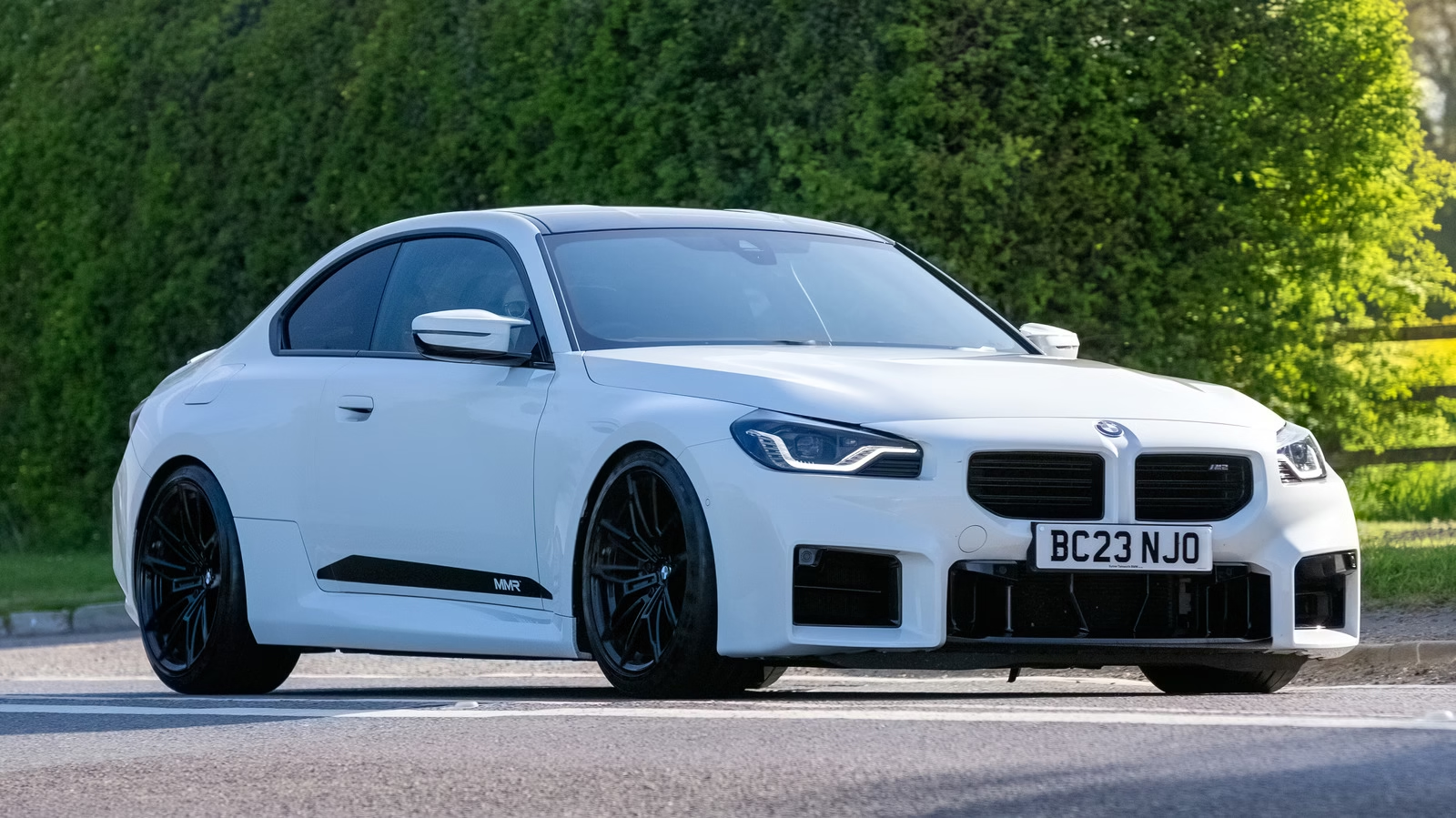
Image Credit: Jalopnik
The automotive world has witnessed a fascinating shift in recent years, with traditional automatic transmissions making a surprising comeback while the once-celebrated Dual Clutch Transmission (DCT) finds itself falling out of favor. This trend reached a pivotal moment when BMW, the German luxury powerhouse, announced its decision to abandon DCTs entirely in favor of conventional automatic transmissions across its entire lineup.
BMW had previously embraced DCT technology in many of its high-performance M vehicles, including the legendary M3, M4, M5, and M6 models. The transmission also found its way into select non-M vehicles like the E92 335iS and the compact but mighty 135i. However, this relationship came to an end when Dirk Hacker, BMW’s Head of Development for the M division, revealed in 2023 that the company would be eliminating both DCTs and manual transmissions from future M models.
The driving forces behind BMW’s strategic shift are multifaceted and practical. According to Hacker, customer comfort played a crucial role in this decision. Traditional automatics simply provide a more refined and comfortable driving experience compared to their dual-clutch counterparts. Additionally, the financial aspect cannot be ignored – DCTs typically carry a higher price tag than conventional automatic transmissions, making the switch economically sensible.
BMW also cited convenience as a major factor, noting that customers frequently reported challenges with low-speed maneuvering and parking when using DCT-equipped vehicles. These everyday driving situations, where smooth and predictable power delivery is essential, highlighted the limitations of dual-clutch technology in real-world scenarios.
The German automaker has placed its confidence in the ZF 8HP traditional automatic transmission, which now powers most of its vehicles. BMW claims this transmission delivers superior fuel efficiency compared to DCTs while offering greater versatility. Unlike DCTs, which were primarily designed for rear-wheel-drive applications, the ZF 8HP can seamlessly adapt to both rear-wheel-drive and all-wheel-drive configurations.
Perhaps most impressively, BMW asserts that the ZF 8HP matches the performance capabilities of its former DCTs while providing additional benefits. The company’s confidence in this technology runs so deep that it has even equipped its race cars with traditional automatics, demonstrating their belief in the transmission’s performance credentials.
Industry-Wide Abandonment of Dual-Clutch Technology
BMW’s decision to return to torque-converter transmissions isn’t an isolated trend but rather part of a broader industry movement that began gaining momentum in 2017. The initial catalyst for this shift was growing reliability concerns combined with rapid improvements in traditional automatic transmission technology. While DCTs offered lightning-fast shift speeds, their jerky behavior, particularly in stop-and-go traffic situations, became a significant drawback for everyday drivers.
Traditional automatics, in contrast, deliver the smooth and refined shifting characteristics that most drivers prefer. However, reliability issues have proven to be the most damaging factor for DCT adoption. Ford’s PowerShift DCT serves as a cautionary tale, plagued by numerous problems including rough gear changes, unusual noises, and transmission control unit failures. These issues resulted in class-action lawsuits across multiple countries, ultimately forcing Ford to abandon the technology in favor of conventional automatics.
The trend continues with other manufacturers following suit. Hyundai has announced plans to replace the DCT in the 2026 Santa Fe with a conventional automatic transmission, citing improved drivability as the primary reason for the change.
Industry experts point to significant improvements in torque converter technology, particularly in shift speed – traditionally the one area where DCTs held a clear advantage. With this performance gap now effectively eliminated, the torque converter, a technology that traces its roots back to a 1905 patent, has reasserted its dominance in the automatic transmission landscape.
Despite the widespread industry shift away from dual-clutch transmissions, the technology isn’t entirely dead. DCTs may find continued life in high-performance applications where their rapid-fire shifting capabilities still provide value. Examples include Porsche’s PDK gearbox and McLaren’s transmission systems in models like the 720S, where track-focused performance takes precedence over everyday comfort and convenience.
This evolution in transmission preferences reflects the automotive industry’s ongoing balance between cutting-edge technology and practical consumer needs. While DCTs represented an impressive engineering achievement, their real-world limitations ultimately led manufacturers back to the proven reliability and refinement of traditional automatic transmissions. For BMW and other automakers, this shift represents not a step backward, but rather a strategic move toward technologies that better serve their customers’ daily driving experiences.