The Maruti eVitara is finally here — Maruti Suzuki’s first-ever electric car, and arguably the most important product launch in the company’s 40+ year history in India. Priced from ₹15.99 lakh (ex-showroom) or ₹10.99 lakh under the BaaS scheme, it promises up to 543 km ARAI range, a 5-star Bharat NCAP safety rating, Level 2 ADAS, and the trust of India’s largest service network. Sounds perfect on paper. But in this Maruti eVitara review India 2026, we’ll tell you exactly where it shines, where it falls short, and whether your money is better spent on a Tata Curvv EV, Hyundai Creta Electric, or Mahindra BE 6.
After analysing drive reviews from Autocar India, CarWale, ZigWheels, DriveSpark, and real owner feedback from Team-BHP, here’s our honest, no-fluff verdict on Maruti’s electric debut.
5-Star Bharat NCAP — Safest Maruti EverThe eVitara scored 5 stars for both adult and child occupant protection, with 7 airbags standard across all variants. It’s the first electric SUV in India to achieve this rating. (Source: Bharat NCAP, December 2025)
Maruti eVitara Price in India 2026: All Variants Explained
Let’s get the numbers out of the way first. The eVitara launched on February 17, 2026, and is available in 3 main variants with 2 battery options. Here’s the complete price breakdown — both outright purchase and BaaS pricing:
| Variant | Battery | Power | ARAI Range | Outright Price | BaaS Price |
|---|---|---|---|---|---|
| Delta | 49 kWh | 144 PS | 440 km | ₹15.99 L | ₹10.99 L + ₹3.99/km |
| Zeta | 61 kWh | 174 PS | 543 km | ₹17.49 L | ₹11.99 L + ₹3.99/km |
| Alpha | 61 kWh | 174 PS | 543 km | ₹19.79 L | — |
| Alpha Dual Tone | 61 kWh | 174 PS | 543 km | ₹20.01 L | — |
The introductory prices are valid until March 31, 2026, so if you’re interested, lock in the price before it increases. Maruti also includes a complimentary 7.4 kW AC home charger and installation with every purchase. Additionally, free charging up to 1,000 kW or one year (whichever is earlier) is offered at Maruti dealerships for early buyers.
Should You Choose BaaS or Outright Purchase?
BaaS (Battery as a Service) at ₹3.99/km makes sense if you drive more than 60-70 km daily. For someone driving 30-40 km daily (the average Indian car commute), outright purchase works out cheaper over 5 years. Quick math: at 40 km/day × 365 days × ₹3.99/km = ₹58,254/year in battery rental alone. Over 5 years, that’s ₹2.91 lakh on top of the car’s price — getting dangerously close to outright purchase cost. BaaS is best for fleet operators and high-mileage drivers.
How Does the Maruti eVitara Look and Feel in Person?
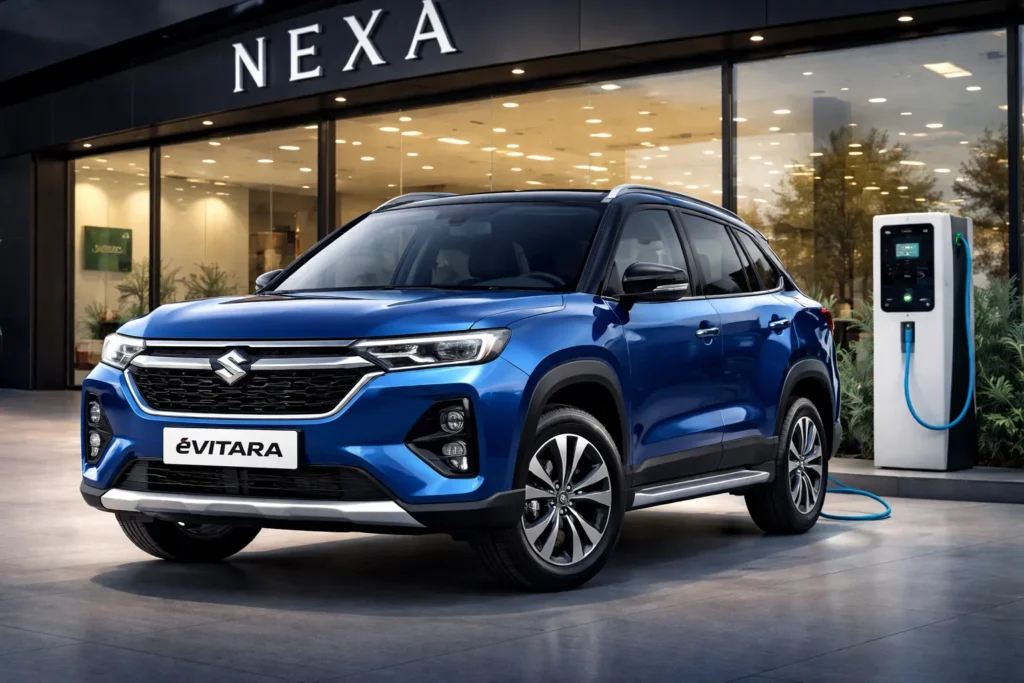
From what we’ve gathered from multiple first-drive reviews, the eVitara looks significantly better in person than in photos. Autocar India described it as having a mix of familiar Maruti design cues and all-new elements, with sharp lines and prominent angles creating a confident stance. The Y-shaped LED DRLs, active air-flap grille, chunky plastic cladding, and 18-inch aero-efficient alloys give it a rugged, purposeful look that sets it apart from the sleeker EVs in the segment.
At 4,275 mm long, 1,800 mm wide, and 1,640 mm tall with a 2,700 mm wheelbase, it’s a proper C-segment SUV — not a puffed-up hatchback. Ground clearance is 180 mm, and the kerb weight is close to 1,800 kg (making it the heaviest Maruti ever built). Available in 10 colours including 4 dual-tone options, it looks particularly sharp in Nexa Blue and Land Breeze Green with the black roof.
Interior Quality: Best-In-Class for Maruti, But Not Segment-Best
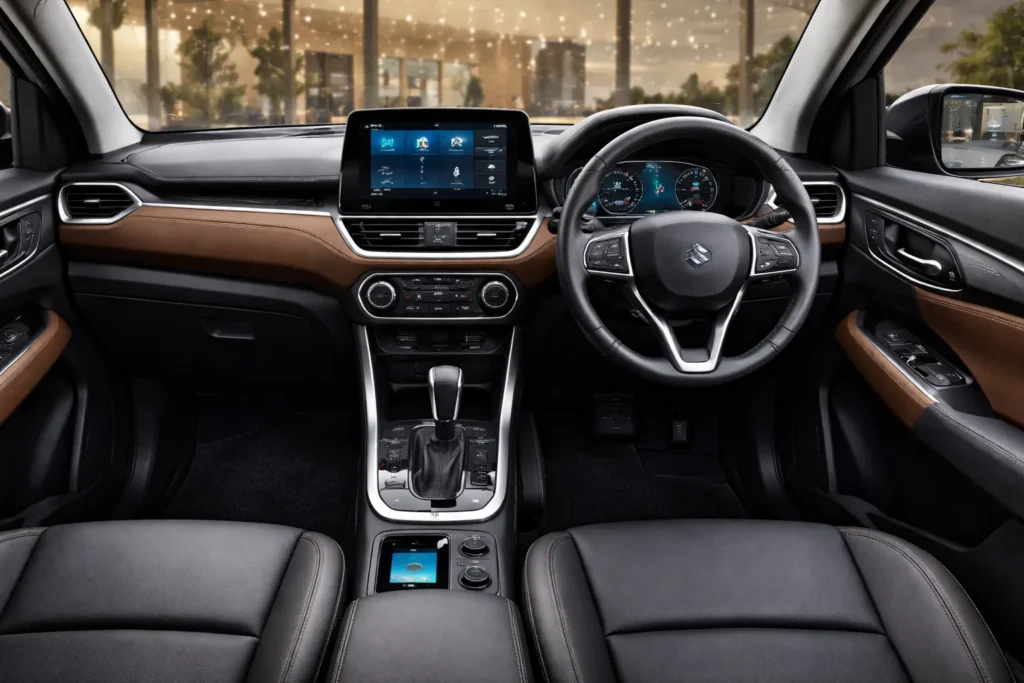
Every reviewer agrees on one thing: the eVitara’s interior is the best Maruti has ever produced. The asymmetric dashboard features a 10.1-inch touchscreen and 10.25-inch digital driver display, with a soft-touch brown leatherette centre panel and dark-silver AC vents. Physical controls for HVAC and volume are a welcome touch — something many modern EVs skip.
However, Team-BHP’s detailed hands-on noted that while the interior is a step up for Maruti, it still lacks the futuristic premium feel of rivals like the Mahindra BE 6 or even the Tata Curvv EV. The lower sections use harder plastics, and fit-finish in some areas falls short of what you’d expect at ₹16-20 lakh.
Maruti eVitara Range and Performance: Does the 543 km Claim Hold Up?
Real-World Range Expectations
The headline 543 km is ARAI-certified range for the 61 kWh FWD variant. Let’s be realistic about what this means on actual Indian roads. Based on Autocar India’s drive experience and ZigWheels’ assessment, expect real-world range of 380-420 km with the 61 kWh battery and 300-350 km with the 49 kWh variant — depending on AC usage, driving style, and city vs highway split.
0-100 km/h in 8.7-9.25 secondsRespectable but not thrilling. Autocar India clocked 9.25 seconds, DriveSpark reported 8.7 seconds. Acceleration is deliberately smooth and linear — not the neck-snapping shove typical of EVs. Maruti has tuned it for efficiency and everyday comfort over sportiness. (Source: Autocar India, DriveSpark first-drive reviews)
Driving Experience: Smooth, Predictable, Very “Maruti”
Multiple reviewers describe the eVitara’s driving character as deliberately calm and accessible — a stark contrast to the punchy Mahindra BE 6 or the sportier Curvv EV. Autocar India noted that the conservative tuning maximises range efficiency, a trait typical of Maruti cars. The steering is light and predictable in city traffic, weighing up nicely in Sport mode at highway speeds.
The ride quality gets universal praise. The suspension absorbs potholes and speed breakers effectively — crucial for Indian roads. The low centre of gravity from the underfloor battery pack provides excellent stability during cornering. Braking is via discs all around. One criticism: regen levels need to be adjusted via the touchscreen, which is cumbersome and should have been mapped to paddle shifters.
“I checked out the eVitara at my local Nexa showroom in Gurgaon. The car feels smooth and silent while driving, and the instant acceleration makes city driving very comfortable. Range is almost what they claim. My only concern is the tight rear headroom — I’m 5’11 and it was noticeable.”— Early showroom visitor review, CarWale (March 2026)
Is the Maruti eVitara Spacious Enough for Indian Families?
Front Seats: Comfortable but Knees-Up Position
The front seats are well-cushioned with the 10-way powered driver seat (Alpha variant) offering good adjustability. However, Autocar India flagged a knees-up seating position that takes getting used to. Ventilated front seats are a strong addition for Indian summers.
Rear Seats: The Biggest Compromise
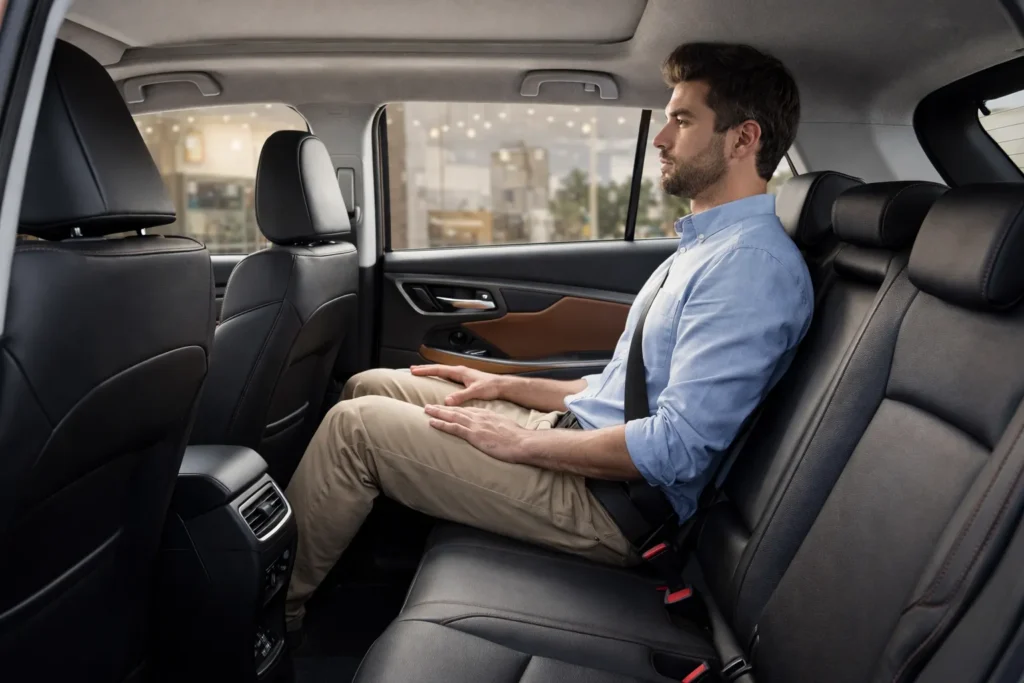
This is where the eVitara loses points. Despite the 2,700 mm wheelbase, rear headroom is tight for anyone close to 6 feet or taller. The backrest recline is minimal — virtually upright at its furthest position. The rear seat also places passengers in a knees-up posture. The 40:20:40 split with individual slide and recline partially compensates, but this isn’t as spacious as the Creta Electric or Curvv EV at the rear.
Boot Space: Smaller Than Expected
Boot space is a disappointment. While exact litres haven’t been officially confirmed for India, European reviewers note it’s notably smaller than competitors. The flat loading lip is practical, but if you’re planning family road trips with luggage, manage your expectations.
Maruti eVitara Features and Safety: Finally, a Loaded Maruti
The feature list is comprehensive for a Maruti — arguably the most feature-rich car they’ve ever sold in India:
Key features across variants: 10.1-inch touchscreen with wireless Android Auto/Apple CarPlay, 10.25-inch digital cluster, 7 airbags (standard on all variants), Level 2 ADAS with 15+ functions (adaptive cruise control, lane-keep assist, autonomous emergency braking, blind-spot monitoring, rear cross-traffic alert), 360-degree camera, electronic parking brake with auto-hold, all-wheel disc brakes, TPMS, connected car tech with smartwatch integration, ventilated front seats (Zeta/Alpha), 10-way powered driver seat (Alpha), Infinity sound system (Alpha), wireless charger, fixed panoramic glass roof (Alpha), ambient lighting, and multiple regen modes.
Level 2 ADAS — A First for Maruti in IndiaThe eVitara is the first Maruti in India with ADAS. It includes adaptive cruise control, lane-keeping assist, collision mitigation braking, blind-spot monitoring, and more — 15+ features total. Previously, this tech was available only in cars costing ₹15+ lakh from Hyundai, Mahindra, and Tata. (Source: Maruti Suzuki official, ZigWheels)
What’s Missing? Features the eVitara Should Have Had
No cruise control in Delta and Zeta variants — a bizarre omission at this price point. No AWD option for India (available internationally). No panoramic sunroof (only a fixed glass roof in Alpha). No rear armrest. Regen adjustment only via touchscreen, not paddle shifters. These are frustrating gaps that make the higher-priced variants feel less competitive against loaded rivals.
Maruti eVitara Pros and Cons: The Honest Summary
✅ PROS
- 5-star Bharat NCAP — safest Maruti ever built
- 543 km ARAI range (61 kWh) — among longest in segment
- BaaS pricing from ₹10.99 lakh lowers entry barrier
- India’s largest service network (4,500+ centres) for peace of mind
- Best interior quality in any Maruti to date
- Smooth, refined, easy-to-drive EV character
- Level 2 ADAS with 15+ features — a Maruti first
- Assured buyback: 60% at 3 years, 50% at 4 years
- 7 airbags standard across ALL variants
- Complimentary home charger + 1 year free dealership charging
❌ CONS
- Rear headroom tight for tall passengers (6 ft+)
- Boot space smaller than segment rivals
- No AWD option for India — available globally
- No cruise control in Delta/Zeta variants
- Interior quality still trails Mahindra BE 6 and Curvv EV
- Regen adjustment via touchscreen, not paddles
- Knees-up seating position front and rear
- No rear armrest in any variant
- Fixed glass roof only, no openable sunroof
- Production cut by 69% due to rare earth shortage — availability issues
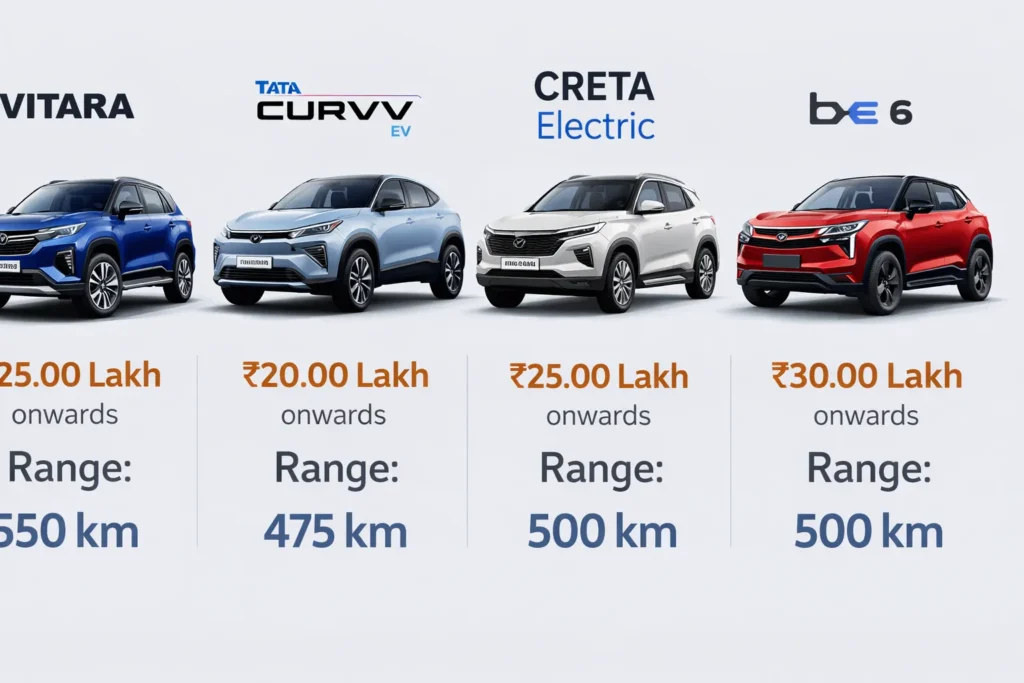
Maruti eVitara vs Tata Curvv EV vs Hyundai Creta Electric vs Mahindra BE 6
| Parameter | eVitara (61 kWh) | Tata Curvv EV | Creta Electric | Mahindra BE 6 |
|---|---|---|---|---|
| Price (from) | ₹17.49 L | ₹17.49 L | ₹17.99 L | ₹18.90 L |
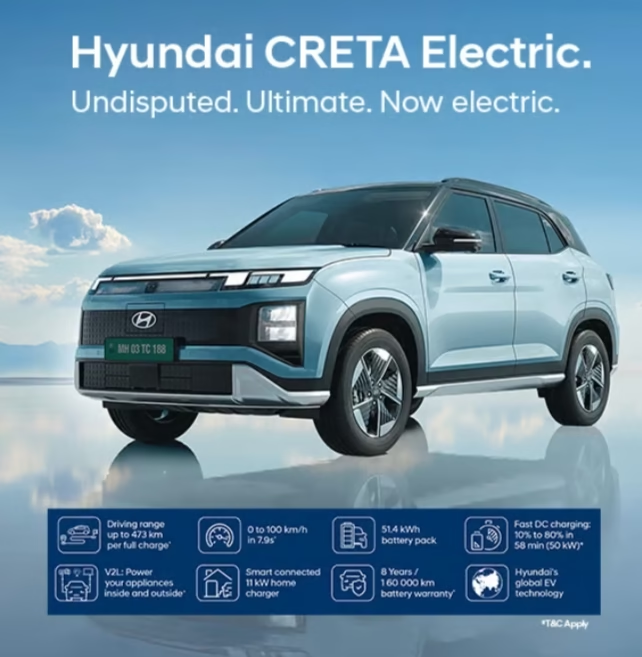
| Battery | 61 kWh | 55 kWh | 51.4 kWh | 59 kWh |
| ARAI Range | 543 km | 502 km | 473 km | 535 km |
| Power | 174 PS | 167 PS | 171 PS | 231 PS |
| 0-100 km/h | ~9 sec | ~8.6 sec | ~9 sec | ~6.7 sec |
| Safety Rating | 5-star BNCAP | 5-star GNCAP | 5-star GNCAP | 5-star BNCAP |
| Airbags | 7 | 6 | 6 | 7 |
| ADAS | Level 2 | Level 2 | Level 2 | Level 2 |
| Boot Space | Limited | 423 L | ~430 L | 455 L |
| AWD | No (India) | No | No | No |
| Rear Space | Average | Good | Good | Average |
| Service Network | 4,500+ | 1,500+ | 1,500+ | 800+ |
| BaaS Option | Yes | No | No | No |
| Battery Warranty | 8 yr/1.6L km | 8 yr/1.6L km | 8 yr/1.6L km | 8 yr/1.5L km |
The eVitara’s strongest advantage is Maruti’s unmatched 4,500+ service centre network — none of the rivals come close. For first-time EV buyers worried about service accessibility in tier-2 and tier-3 cities, this is a genuine differentiator. The BaaS pricing model also lowers the entry barrier significantly.
However, if space, performance, and premium feel matter more, the Mahindra BE 6 (231 PS, sportier design) and Tata Curvv EV (better rear space, larger boot) offer stronger propositions at similar or slightly higher prices.
🏆 Our Verdict: Maruti eVitara Review India 2026
The eVitara is exactly what you’d expect from Maruti’s first EV — safe, reliable, efficient, and sensible. It’s not the most exciting or spacious electric SUV you can buy, but it’s arguably the most trustworthy one. For lakhs of Maruti loyalists considering their first EV, this is the car that makes the switch feel comfortable, not radical.
Buy the eVitara if…You’re a first-time EV buyer who values Maruti’s service network, safety, and range over sportiness. You want BaaS pricing flexibility. You drive primarily in the city with occasional highway trips.
Skip the eVitara if…You need spacious rear seats for tall passengers. You want a performance-oriented EV. You expect premium interiors at ₹20 lakh. You need AWD for hill station drives.
Best variant to buy:Zeta 61 kWh at ₹17.49 lakh — it gets the bigger battery (543 km range), ventilated front seats, and most essential features without the Alpha’s premium.
Wait if…You can hold off until Q3 2026. The Hyundai Creta Electric, Tata Curvv EV facelift, and Toyota eBella (eVitara twin) will add more options and likely force price corrections.
How Much Does It Cost to Run the Maruti eVitara Per Month?
Let’s calculate the actual monthly running cost for someone driving 40 km/day (average Indian commute) with the 61 kWh variant:
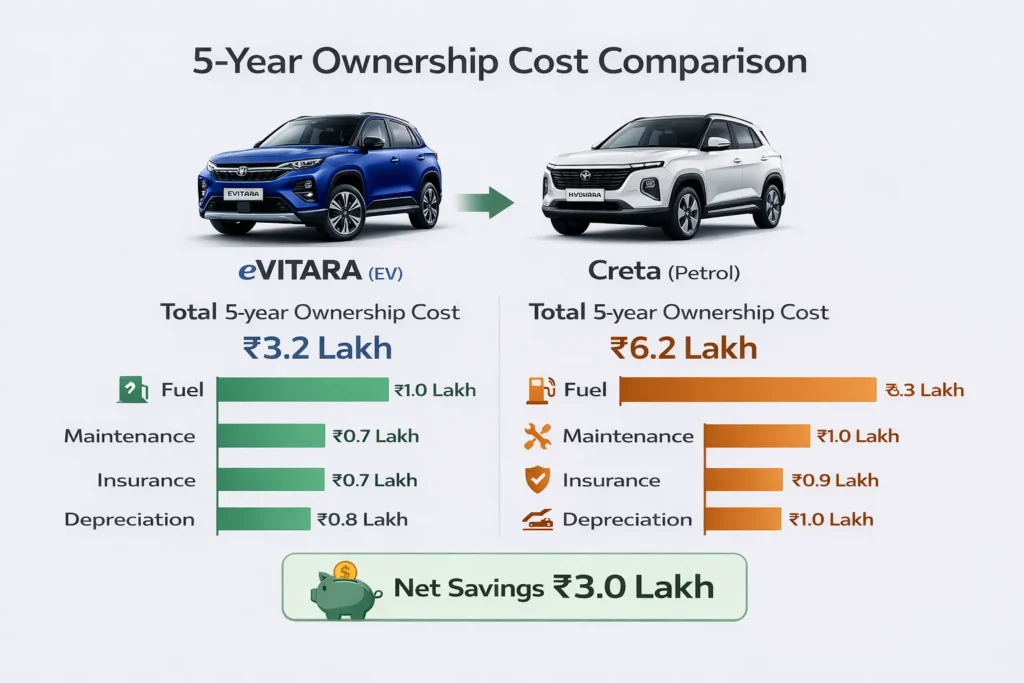
At home charging rates of ₹5-8 per unit and an efficiency of approximately 7-8 km/kWh in real-world conditions, the running cost works out to roughly ₹0.60-1.15 per km. For 40 km/day × 30 days = 1,200 km/month, your electricity bill adds just ₹720-1,380 per month. Compare that to a petrol Creta costing ₹4,200-5,000/month in fuel for the same distance. That’s a saving of ₹3,000-4,000 monthly.
Factor in near-zero maintenance for the first 3-4 years (no engine oil, no clutch, fewer brake pad changes due to regen), and the total cost of ownership tilts heavily in the eVitara’s favour over 5 years — despite the higher purchase price.
Know More: Best Car for Ola Uber Drivers in India 2026: 7 Cars That Actually Make You Money
Final Word: Is the Maruti eVitara Review India 2026 Positive or Negative?
Our Maruti eVitara review India 2026 verdict is cautiously positive. It’s a solid 7.5/10 — great range, top-tier safety, unbeatable service network, and innovative BaaS pricing. But it’s held back by tight rear space, missing features in lower variants, no AWD, and an interior that doesn’t match the price tag against rivals.
For Maruti’s first EV, it’s a commendable effort. It won’t win over EV enthusiasts who want cutting-edge tech and sporty performance — the Mahindra BE 6 handles that. But for the millions of Maruti-loyal Indian families looking to make a safe, sensible switch to electric, the eVitara is the most reassuring choice in the market as of March 2026.
Thinking about the eVitara? Book a test drive at your nearest Nexa showroom before March 31 to lock in introductory prices. And if you need help deciding between variants, drop your questions in the comments — our team responds to every query.
Frequently Asked Questions (FAQs)
What is the price of Maruti eVitara in India 2026?
The Maruti eVitara price starts at ₹15.99 lakh (ex-showroom) for the Delta 49 kWh variant and goes up to ₹20.01 lakh for the Alpha 61 kWh Dual Tone. Under the BaaS (Battery as a Service) model, the entry price drops to ₹10.99 lakh plus ₹3.99 per km battery rental fee. These are introductory prices valid until March 31, 2026. Maruti also includes a complimentary 7.4 kW AC home charger and installation with every purchase, plus free charging at dealerships for the first year or 1,000 kW.
What is the real-world range of the Maruti eVitara?
The 61 kWh variant has an ARAI-certified range of 543 km, while the 49 kWh variant claims 440 km. In real-world Indian driving conditions — with AC, city traffic, and mixed usage — expect approximately 380-420 km from the 61 kWh battery and 300-350 km from the 49 kWh. ZigWheels’ assessment estimates 400+ km real-world range is achievable with conservative driving. Highway range at 100+ km/h will be lower due to aerodynamic drag.
Is the Maruti eVitara safe?
The eVitara scored 5 stars in Bharat NCAP crash tests for both adult and child occupant protection, making it the safest Maruti Suzuki car ever built and the first electric SUV in India to achieve this rating. Standard safety features across all variants include 7 airbags, Level 2 ADAS with 15+ functions, ESP, all-wheel disc brakes, 360-degree camera, TPMS, electronic parking brake with auto-hold, and high-tensile steel comprising 60%+ of the body structure.
Should I buy the Maruti eVitara or Tata Curvv EV?
Choose the eVitara if you prioritise Maruti’s 4,500+ service centre network, the BaaS pricing option, and longer claimed range (543 km vs 502 km ARAI). Choose the Tata Curvv EV if rear seat space, boot space (423 litres), sportier design, and a more premium-feeling interior matter more. The Curvv EV also has a slight performance edge. For first-time EV buyers in tier-2/3 cities, the eVitara’s service accessibility is a stronger advantage.
What is the BaaS model for Maruti eVitara?
BaaS (Battery as a Service) is a pay-per-use battery rental scheme. You buy the eVitara without the battery, reducing the upfront cost to ₹10.99 lakh (Delta). You then pay ₹3.99 per km as battery rental. This model suits high-mileage users like fleet operators. For average drivers doing 30-40 km daily, outright purchase is cheaper over 5 years. BaaS also eliminates battery degradation risk since Maruti owns and manages the battery.
Does the Maruti eVitara get AWD in India?
No, the India-spec Maruti eVitara is only available in front-wheel-drive (FWD) configuration at launch. The AWD variant with the ALLGRIP-e system (dual motors, front + rear) is available in international markets including Europe. Maruti has hinted at a possible AWD launch in India in the future but hasn’t committed to a timeline. This is a significant miss for buyers who drive in hilly terrains or want enhanced traction.
What are the variants of Maruti eVitara in India?
The eVitara is available in 4 variants: Delta (49 kWh, ₹15.99 lakh), Zeta (61 kWh, ₹17.49 lakh), Alpha (61 kWh, ₹19.79 lakh), and Alpha Dual Tone (61 kWh, ₹20.01 lakh). All prices are ex-showroom. The Zeta is the best value pick, offering the larger battery, ventilated front seats, and most practical features. The Alpha adds powered driver seat, Infinity audio, ambient lighting, and the fixed glass roof.
How much does it cost to charge the Maruti eVitara?
At home electricity rates of ₹5-8 per unit, a full charge of the 61 kWh battery costs approximately ₹305-488. This translates to a running cost of ₹0.56-0.90 per km — roughly 80-85% cheaper than a comparable petrol SUV costing ₹5-7/km. Public fast chargers typically cost ₹15-25 per unit, making them more expensive but useful for long trips. Maruti offers free dealership charging for 1 year or 1,000 kW with every eVitara purchase.
What is the battery warranty on the Maruti eVitara?
Maruti offers an 8-year or 1,60,000 km battery warranty (whichever comes first) on the eVitara. This covers battery degradation and defects. The brand also offers an assured buyback programme: up to 60% value return at 3 years/45,000 km and 50% at 4 years/60,000 km — addressing the biggest concern for first-time EV buyers worried about resale value. The BaaS model further eliminates battery ownership risk.
Is the Maruti eVitara worth buying in 2026?
The Maruti eVitara is worth buying if you’re a first-time EV buyer who values safety (5-star BNCAP), range (543 km ARAI), and Maruti’s 4,500+ service centre network over sportiness or space. The Zeta 61 kWh at ₹17.49 lakh offers the best value. However, if rear seat comfort for tall passengers, a large boot, or AWD capability are priorities, consider the Tata Curvv EV or wait for the Hyundai Creta Electric. The eVitara is the most “sensible” EV in its class — reliable, efficient, and backed by India’s most trusted service ecosystem.