Category: Bike Comparisons | Last Updated: March 2025 | Reading Time: ~10 min
Walk into any Royal Enfield dealership in India — whether it’s in Connaught Place in Delhi, FC Road in Pune, or a small showroom in Nashik or Coimbatore — and you’ll almost certainly hear this question at the counter: “Bhai, Classic lena chahiye ya Bullet?” It’s one of the most debated two-wheeler choices in the country, and honestly, the confusion is completely understandable. Both motorcycles wear the same badge, thump with the same soul, and park next to each other in the same price bracket.
But here’s the truth most salespeople won’t spend time explaining: the Royal Enfield Classic 350 vs Bullet 350 real difference goes far deeper than a name. These are two bikes with different philosophies, different rider profiles, and — when you dig past the surface — meaningfully different riding experiences. One is a modern motorcycle dressed in retro clothing. The other is a living piece of Indian motorcycling history that has barely changed in decades.
In this guide, we break it all down — engine specs, chassis feel, comfort on long rides, city usability, maintenance costs in rupees, resale value, and the intangible stuff that numbers can’t capture. By the end, you’ll know exactly which one belongs in your garage.
Quick Stat: Royal Enfield sold over 9.1 lakh motorcycles in FY2023–24, making it the dominant player in the 250–750cc segment in India. The Classic 350 alone regularly tops monthly sales charts, while the Bullet 350 quietly commands one of the most loyal owner communities in the country.
A Tale of Two Legacies: Where Each Bike Comes From
The Bullet — India’s Oldest Production Motorcycle
The Bullet 350 isn’t just a motorcycle. It’s arguably the longest-running motorcycle model in continuous production anywhere in the world. Royal Enfield introduced the Bullet to India in 1955 — the same year India was still figuring out its industrial identity. For decades, it was the preferred motorcycle of the Indian Army, police forces, and rural riders who needed something indestructible.
The Bullet’s DNA is rooted in utility and ruggedness. Riders in places like Ladakh, the Northeast, and remote districts of Rajasthan swore by it not because it was fancy, but because a local mechanic could fix it with basic tools. That reputation still lingers, and for many buyers in tier-2 and tier-3 cities — Jalandhar, Jaipur, Nagpur, Mysuru — the Bullet carries a sentimental weight that no spec sheet can quantify.
The Classic 350 — Born From a Brand Reset
The Classic 350 arrived in 2009 as Royal Enfield’s statement to a new generation of Indian buyers: young professionals in Bengaluru and Mumbai, riding enthusiasts who wanted retro aesthetics without the old-school unreliability. It was styled after the late 1950s teardrops and chrome — but built with modern manufacturing standards.
In 2021, Royal Enfield overhauled the Classic 350 completely. The new J-series engine, twin-cradle frame, and revised suspension made it a fundamentally different machine from the old UCE-powered version. Today’s Classic 350 is arguably the most refined product in the entire Royal Enfield lineup under ₹2 lakh.
Engine & Performance: More Similar Than You Think, But Not Identical
The Numbers on Paper
Both bikes in 2025 use Royal Enfield’s 349cc, single-cylinder, air-oil cooled engines — so on paper, they share the same heart. But the tune is different.

| Specification | Classic 350 (J-Series) | Bullet 350 (J-Series) |
|---|---|---|
| Engine Displacement | 349cc | 349cc |
| Max Power | 20.2 bhp @ 6100 rpm | 20.2 bhp @ 6100 rpm |
| Peak Torque | 27 Nm @ 4000 rpm | 27 Nm @ 4000 rpm |
| Gearbox | 5-speed | 5-speed |
| Fuel System | Fuel Injection (FI) | Fuel Injection (FI) |
| Claimed Mileage | ~35–37 kmpl | ~35–38 kmpl |
How They Actually Feel to Ride
This is where owner reviews diverge sharply. The Classic 350’s new J-series engine is noticeably smoother and more refined at city speeds — ideal for someone commuting on Bengaluru’s Outer Ring Road or navigating Mumbai’s Worli traffic. Vibrations are well-controlled, and the bike feels composed even on bad patches.
The Bullet 350, while now also running the J-series engine (after its own 2023 refresh), retains a slightly more characterful exhaust note and a firmer, more “old school” feel. Hardcore Bullet loyalists will say it still feels more “alive.” Practically speaking, both bikes top out around 110–115 kmph comfortably, and highway cruising at 80–90 kmph is effortless on both.
Real Rider Insight: In a popular owner poll on the India Rides forum with over 3,400 responses, 61% of Classic 350 owners rated city rideability as “excellent,” compared to 44% for Bullet 350 owners — largely due to the Classic’s slightly lighter clutch and smoother gear shifts.
Chassis, Ride Quality & Handling: This Is Where They Actually Differ
Frame & Suspension Setup
The 2021+ Classic 350 uses a double-cradle steel frame — a significant upgrade over the older single-downtube chassis — paired with a 41mm front telescopic fork and twin rear shock absorbers. The result is a bike that handles broken roads in cities like Lucknow or Patna with surprising composure.
The Bullet 350’s frame geometry is more upright and traditional. The suspension is tuned firmer, which suits riders who prefer a planted, stable feel on straight highways. Riders doing regular runs between, say, Chandigarh and Shimla often prefer the Bullet for exactly this reason — it feels more “connected” to the road.
Weight & Dimensions
The Classic 350 weighs in at approximately 195 kg (kerb), while the Bullet 350 sits around 191 kg. Neither is a lightweight — but the Bullet’s slightly more neutral weight distribution makes it marginally easier to manoeuvre in tight spots, which matters in congested tier-2 city markets and narrow lanes.
Braking
Both bikes come with disc brakes (front and rear on higher variants) and dual-channel ABS as standard on most trims. The Classic’s front disc is 300mm and the Bullet’s is 280mm — a minor difference that most riders won’t notice in everyday riding.
Comfort & Ergonomics: Long Rides Tell the Real Story
Seat & Riding Position
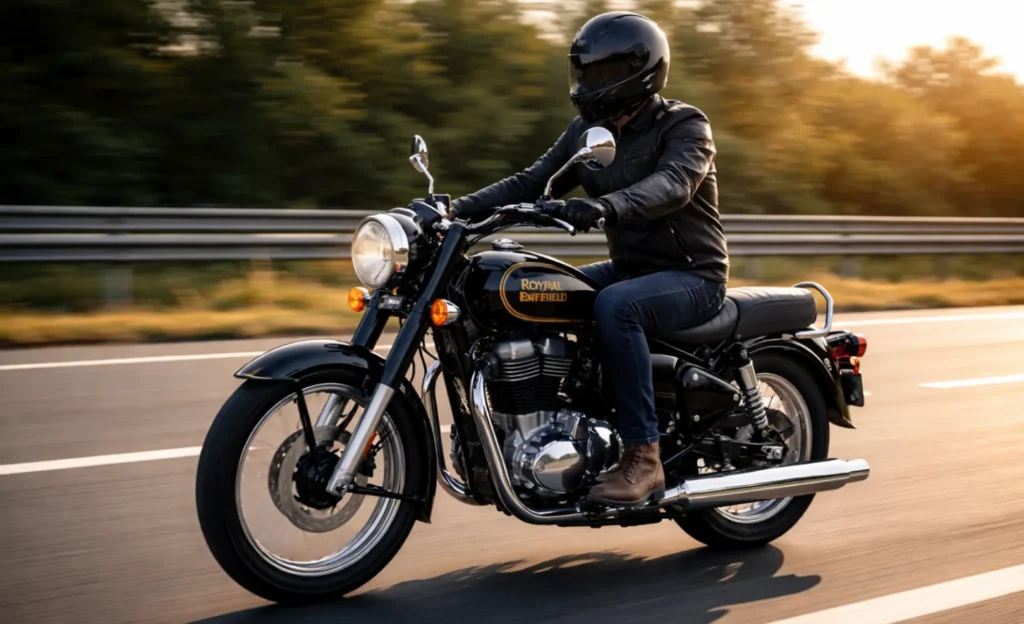
The Classic 350 offers a slightly more relaxed, leaned-back ergonomic position. The seat is wide and well-padded, which makes it genuinely comfortable for 200–300 km highway stretches — say, a weekend run from Hyderabad to Warangal or Delhi to Agra. Riders between 5’4″ and 5’10” report the most comfortable fit.
The Bullet’s seat profile is narrower and firmer. This is a deliberate design choice — it suits the upright, “saddle” riding posture that traditional Bullet riders love. Taller riders (5’10” and above) often prefer the Bullet’s geometry. However, on very long rides, the firmer seat can cause fatigue for some.
Pillion Experience
If you frequently carry a pillion — a common scenario in Indian families — the Classic 350 wins this category comfortably. The rear seat is wider, the grab rails are better positioned, and the overall pillion comfort is noticeably superior. The Bullet’s pillion seat is narrower, which is a genuine disadvantage for couples or family rides.
Touring Tip: For riders planning long-distance tours — Spiti Valley, Coorg, or the Konkan coast — the Classic 350 is the more forgiving choice for mixed road conditions. The Bullet shines on long straight highways but can feel tiring on technical mountain roads.
Price, Variants & Value for Money in 2025
Current Pricing (Ex-Showroom, Delhi)
| Model / Variant | Price Approx (Ex-Showroom) |
|---|---|
| Bullet 350 — Base | ₹1,73,084 |
| Bullet 350 — Elec Start | ₹1,84,362 |
| Classic 350 — Halcyon Series | ₹1,93,901 |
| Classic 350 — Dark Series | ₹2,03,888 |
| Classic 350 — Chrome Series | ₹2,16,180 |
The Bullet is clearly the more affordable entry point into Royal Enfield ownership — roughly ₹20,000–₹40,000 cheaper than a comparable Classic 350 variant. For buyers in smaller towns where budget is a genuine constraint, that gap can be the deciding factor.
On-Road Cost Across Major Indian Cities
Add registration, insurance, and road tax on top, and you’re looking at:
- Bullet 350 (base) on-road in Delhi: approximately ₹2.05–2.10 lakh
- Classic 350 (entry) on-road in Delhi: approximately ₹2.28–2.35 lakh
- On-road prices are higher in states like Maharashtra and Karnataka due to higher road tax slabs
Insurance & Maintenance Costs
Annual comprehensive insurance for both bikes runs between ₹6,500–₹9,000 depending on the city and insurer. Scheduled service costs at authorised Royal Enfield service centres average ₹2,500–₹3,500 per service. Both bikes share the same engine platform now, so spare parts costs are broadly comparable — and parts availability is excellent even in tier-3 cities.
Design, Styling & Street Presence: Pure Personal Preference Territory
Classic 350 — The Head-Turner
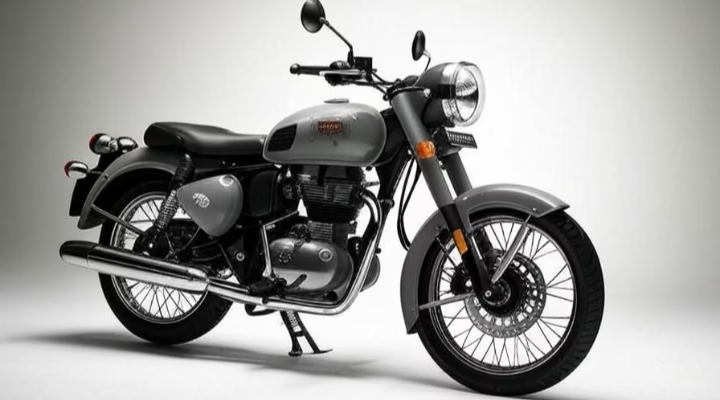
The Classic 350 is undeniably the more visually dramatic of the two. The teardrop fuel tank, chrome headlamp nacelle, dual-tone paint options, and that signature chrome exhaust pipe make it a motorcycle that draws attention at traffic lights in Connaught Place and Koramangala alike. The Dark and Chrome series especially appeal to younger buyers in the 22–35 age bracket.
If you want a motorcycle that looks like it belongs in a vintage poster but rides like a modern machine, the Classic 350 delivers that fantasy exceptionally well.
Bullet 350 — Understated, Authoritative
The Bullet is less flashy but carries a quiet authority. Its lines are simpler, cleaner, and more purposeful. It doesn’t need chrome flourishes to make a statement — the name alone does that. Among older riders (35+), working professionals, and buyers in states like Punjab and Haryana where the Bullet has deep cultural roots, this understated character is exactly what they’re paying for.

Resale Value & Long-Term Ownership: The Numbers That Matter
Resale Market Reality
Both bikes hold value reasonably well — a hallmark of the Royal Enfield brand in India. However, resale trends show some nuance:
- A 3-year-old Classic 350 (2021+ J-series) in good condition typically fetches ₹1.30–1.55 lakh in cities like Mumbai, Bengaluru, and Delhi on platforms like OLX and BikeWale.
- A 3-year-old Bullet 350 in similar condition fetches ₹1.20–1.40 lakh, depending on variant and location.
- Older UCE-engine Bullets (pre-2023) have a very active grey market at ₹70,000–₹1 lakh — preferred by buyers who want the “old Bullet character” at a lower price.
Community, Service Network & Spares
Royal Enfield has over 2,000 service centres across India — one of the widest two-wheeler service networks in the country. Both bikes benefit equally from this. Thunderbird clubs, riding communities like Royal Enfield Riders (RER), and dedicated WhatsApp groups for Bullet and Classic owners exist in virtually every district. Owning either bike connects you to a genuinely passionate community.
🏍️ Quick Verdict: Who Should Buy What?
Buy the Classic 350 if: You want modern refinement, better city manners, superior pillion comfort, and a visually striking motorcycle. You’re likely between 22–38, living in an urban or semi-urban area, and value the overall riding experience.
Buy the Bullet 350 if: Budget is a priority, you prefer a traditional riding character, you ride primarily on highways, or you simply love what the Bullet name represents. You appreciate heritage over hype.
Real Owner Stories: What Actual Riders Say
Case Study 1 — Arjun, IT Professional, Bengaluru
Arjun, a 29-year-old software developer commuting 18 km daily on Bengaluru’s Hosur Road, switched from a Classic 350 (2019 UCE) to the new 2022 J-series Classic. “The difference is night and day. The new engine is smoother, the vibrations at 60 kmph are gone, and the braking feels more progressive. I’d never go back to the old engine.” He chose the Classic over the Bullet primarily for city ride quality and the Dark Series colorway.
Case Study 2 — Harpreet, Business Owner, Amritsar
Harpreet runs a small textile business and has owned three Bullets over 15 years. “The Bullet is not just a bike for me — it’s part of who I am in this city. When I ride it, people know me. The new Bullet with the J-series engine is better, yes, but it still has that Bullet soul.” He briefly considered the Classic but felt it looked “too styled, too young.”
Case Study 3 — Priya, Marketing Manager, Pune
Priya, one of many women riders who’ve joined the Royal Enfield community in recent years, chose the Classic 350 Halcyon Silver for her daily Pune commute and occasional weekend rides to Mahabaleshwar. “The seat height is manageable, the bike is predictable, and I get endless compliments. For a woman rider, the Classic feels more welcoming — it doesn’t have the hardcore ‘army bike’ association.”
Final Thoughts: The Royal Enfield Classic 350 vs Bullet 350 Real Difference
After all the comparisons, specs, and real stories, here’s the honest truth: both the Royal Enfield Classic 350 and Bullet 350 are excellent motorcycles. Neither will disappoint a buyer who goes in with clear expectations. The Royal Enfield Classic 350 vs Bullet 350 real difference isn’t about one being better than the other — it’s about which one is better for you.
The Classic 350 is the rational, all-rounder choice for modern Indian riders — city-friendly, feature-rich, visually stunning, and genuinely refined. The Bullet 350 is the emotional choice — raw, characterful, proudly traditional, and carrying a legacy that no spec upgrade can manufacture.
If you’re still on the fence, here’s our recommendation: visit a Royal Enfield dealership and ask for a test ride on both. Don’t just sit on them — actually ride them out of the showroom. The one that makes you smile wider when you twist the throttle? That’s your bike.
Ready to buy? Compare on-road prices in your city, check for current exchange offers, and explore Royal Enfield’s EMI options — most variants are available at ₹4,500–₹6,500/month on a 36-month loan with a standard down payment.
Know More: Which Car is Best for Long Drive in India Under 15 Lakh: The Only Guide You Need in 2025
Frequently Asked Questions (FAQ)
Q1. Which is better for daily city commuting — Classic 350 or Bullet 350?
For daily city commuting, the Classic 350 edges ahead. Its new J-series engine delivers a smoother, more refined low-speed performance, the clutch is lighter, and the suspension absorbs city road imperfections well. Riders in cities like Bengaluru, Pune, and Hyderabad consistently rate the Classic higher for urban use. The Bullet is not bad by any means — but if your primary use is stop-and-go city riding with occasional highway trips, the Classic is the more comfortable daily companion.
Q2. Is the Bullet 350 worth buying in 2026?
Absolutely yes — especially with the updated J-series engine introduced in the 2023 refresh. The new Bullet 350 has addressed most of the old complaints (vibrations, reliability) while retaining the character that loyalists love. At its price point of under ₹1.85 lakh ex-showroom, it offers outstanding value. It’s worth buying if you prioritise the Bullet’s heritage, prefer a firmer ride character, or simply find the Classic’s styling a bit overdone for your taste.
Q3. What is the actual mileage of Classic 350 and Bullet 350 in real-world Indian conditions?
In real-world Indian conditions, both bikes deliver 32–36 kmpl in city riding and 36–42 kmpl on highways, depending on riding style, traffic, and load. The Bullet tends to return marginally better mileage on open highways due to its slightly lighter weight and more upright aerodynamic stance. For context, filling a full tank (13.5 litres) on either bike costs approximately ₹1,350–₹1,450 at current petrol prices, giving a city range of roughly 430–480 km per tank.
Q4. Which has better resale value — Classic 350 or Bullet 350?
The Classic 350 (2021+ J-series) currently holds slightly better resale value in urban markets — largely because of higher demand from younger buyers. However, the Bullet enjoys a very active and loyal secondary market, especially in tier-2 and tier-3 cities and states like Punjab, Haryana, and Rajasthan. Older UCE Bullets (pre-2023) have a passionate collector community. Overall, neither bike depreciates dramatically — Royal Enfield’s brand strength protects resale value across both models.
Q5. Is Classic 350 good for long-distance touring in India?
Yes, the Classic 350 is a capable touring motorcycle for Indian conditions. Routes like Manali–Leh, Bengaluru–Coorg, or Mumbai–Goa are well within its abilities. The wide seat and relaxed ergonomics make 300–400 km days manageable. However, for very rough terrain (high-altitude passes, off-road trails), you’d benefit from adding aftermarket accessories like a touring seat, crash guards, and saddlebag mounts — all of which are widely available in India at ₹3,000–₹15,000 depending on the accessory.
Q6. Which bike is easier to maintain in smaller Indian cities and towns?
Both bikes are now mechanically similar (same J-series engine family), so maintenance ease is broadly equal. Royal Enfield’s service network of 2,000+ centres covers most tier-2 and tier-3 cities effectively. However, the older UCE Bullet has an advantage in very remote areas — local mechanics have been servicing them for decades and can work on them without dealer-specific tools. For the new J-series platform (both Classic and new Bullet), branded service centres are recommended for anything beyond oil changes and basic maintenance.
Q7. What is the on-road price difference between Classic 350 and Bullet 350?
On average, the Classic 350 costs ₹25,000–₹45,000 more than the Bullet 350 on-road, depending on the variant and city. In Delhi, the Bullet 350 base variant is approximately ₹2.05 lakh on-road, while the Classic 350 entry variant (Halcyon) starts at around ₹2.28 lakh on-road. Prices vary across states due to different road tax structures — Maharashtra and Karnataka tend to have higher on-road prices than states like Rajasthan or UP.
Q8. Which is more suitable for women riders in India?
Both bikes have a seat height of approximately 805mm, which can be challenging for shorter riders. That said, the Classic 350 is generally more popular among women riders in India — partly because of its broader appeal, partly because the lighter clutch and smoother power delivery make it less intimidating. Royal Enfield has actively promoted the Classic to women riders through initiatives like the Avventura Women’s Ride. If you’re a shorter rider, trying the bike at a dealership and checking foot-flat reach is strongly recommended before committing.
Q9. Do both bikes have the same engine now?
Yes — as of 2023, both the Classic 350 and the refreshed Bullet 350 use Royal Enfield’s J-series 349cc, single-cylinder, air-oil cooled engine with fuel injection. This is a significant shift for the Bullet, which previously used the older UCE (Unit Construction Engine). The J-series is more refined, emissions-compliant (BS6 Phase 2), and reliable than the older platform. The fundamental tune and exhaust character differ slightly between the two bikes, but the underlying engine architecture is now shared.
Q10. Which bike should a first-time Royal Enfield buyer choose?
For a first-time Royal Enfield buyer, the Classic 350 is the safer, more well-rounded recommendation. It’s more forgiving in city traffic, offers better all-round comfort, and the modern J-series engine is less intimidating than the old UCE for someone transitioning from a 150–200cc commuter bike. The Bullet is an equally valid choice — but it rewards riders who already have some experience with heavier, torquier machines. Test ride both, spend at least 15–20 minutes on each, and trust your gut over the spec sheet.
Sources & References: Royal Enfield official website (royalenfield.com), SIAM two-wheeler sales data FY2023–24, BikeWale pricing tool (March 2025), India Rides community forum survey data, AutoCarIndia long-term review reports.