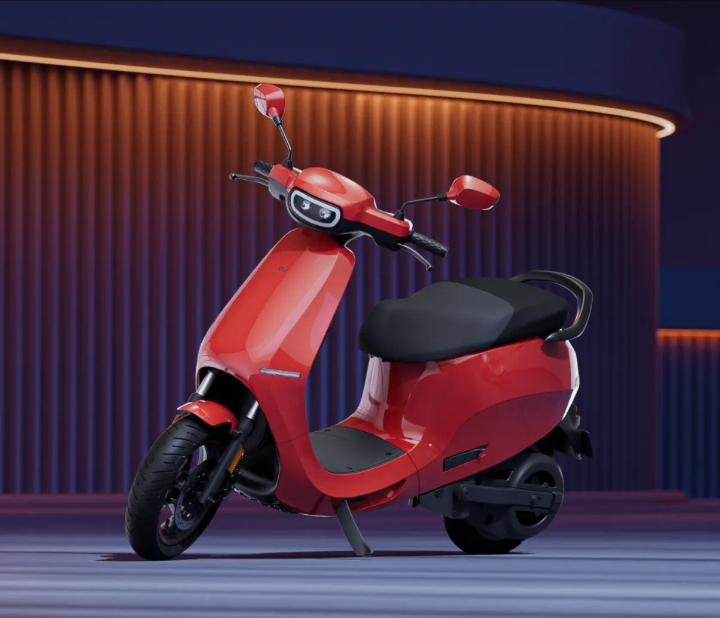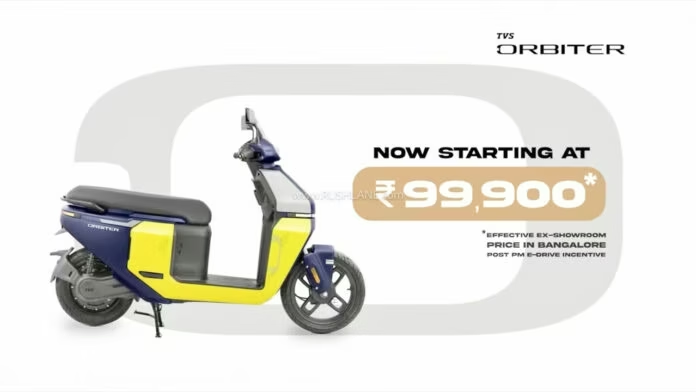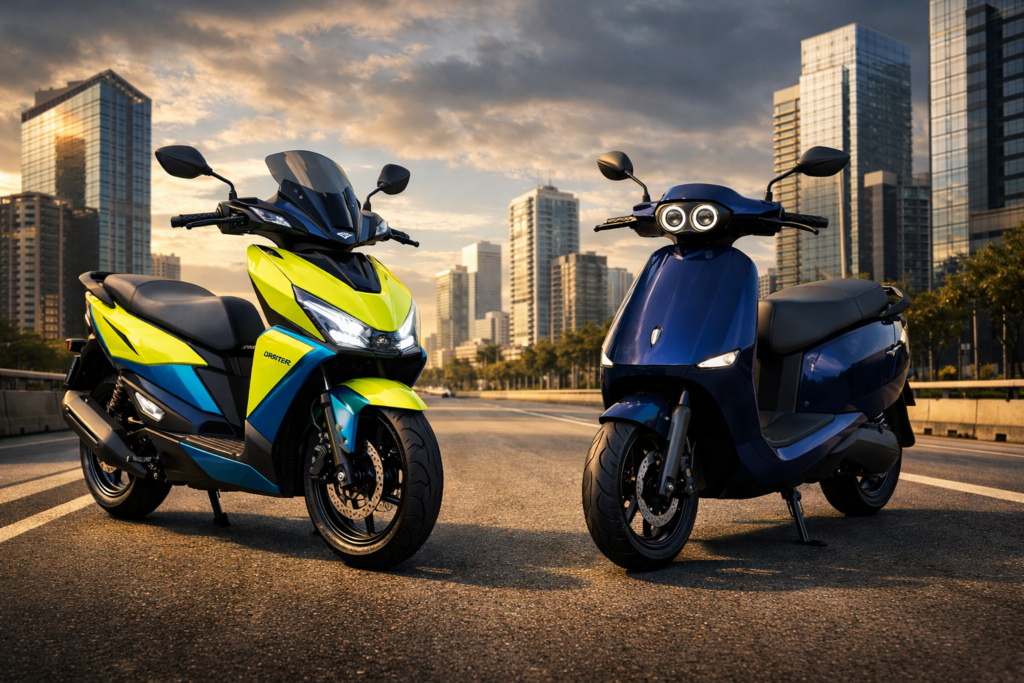
If you’re shopping for an electric scooter in India right now, there’s a good chance you’ve narrowed your options down to two names: TVS and Ola. And if you’re stuck on the TVS Orbiter vs Ola S1 Pro debate, you’re definitely not alone. These two scooters are dominating showroom conversations across Mumbai, Bangalore, Delhi, and even tier-2 cities like Lucknow and Indore.
When discussing the TVS Orbiter vs Ola S1 Pro, it’s essential to consider not just specifications but also real-world usability.
The choice between the TVS Orbiter vs Ola S1 Pro often reflects personal preferences for technology and performance.
Here’s the thing though — comparing the TVS Orbiter vs Ola S1 Pro isn’t as straightforward as picking the one with more range or a lower price tag. TVS has positioned the Orbiter as a no-fuss, affordable daily commuter with the backing of a brand that’s been making two-wheelers for over four decades. Ola, on the other hand, came in swinging with tech-loaded scooters, aggressive pricing, and a direct-to-consumer model that shook the industry.
In this comparison, we’re going deep — pricing in rupees, real-world range (not the inflated ARAI numbers), build quality, after-sales experience, charging infrastructure, and everything else that actually affects your daily life. By the end, you’ll know exactly which scooter deserves your hard-earned money.
56 Lakh+Electric two-wheelers sold in India in FY2025 — Source: SMEV (Society of Manufacturers of Electric Vehicles)
In the ongoing TVS Orbiter vs Ola S1 Pro conversations, customers frequently highlight the price-to-features ratio.
Understanding the intricacies of TVS Orbiter vs Ola S1 Pro can significantly influence your buying decision.
TVS Orbiter vs Ola S1 Pro: Quick Specs Comparison at a Glance
Before we get into the nuances, let’s lay out the raw numbers. This is the TVS Orbiter vs Ola S1 Pro comparison in its most distilled form — the specs that matter for everyday Indian commuters.
| Specification | TVS Orbiter V2 | Ola S1 Pro Gen 3 |
|---|---|---|
| Ex-Showroom Price | ₹1,09,894 | ₹1,24,564 (3 kWh) |
| Battery Capacity | 3.1 kWh | 3 kWh / 4 kWh |
| Claimed Range (IDC) | 158 km ✓ | 176 km (3 kWh) |
| Real-World Range | 100–115 km | 120–150 km ✓ |
| Top Speed | 68 km/h | 117 km/h ✓ |
| Motor Power | 2.5 kW | 11 kW (peak) ✓ |
| Charging (0-80%) | 4 hrs 10 min ✓ | ~5 hours |
| Boot Space | 34 litres ✓ | 34 litres ✓ |
| Kerb Weight | 112 kg ✓ | 125 kg |
| Brakes | Drum (F+R), CBS | Disc (F+R), ABS ✓ |
| Display | 5.5″ LCD | 7″ Touchscreen TFT ✓ |
| Riding Modes | 2 (Eco, City) | 4 (Eco, Normal, Sport, Hyper) ✓ |
| Seat Height | 760 mm ✓ | 805 mm |
| Warranty (Battery) | 3 yrs / 50,000 km | 8 years ✓ |
| BaaS Option | Yes (from ₹862/mo) ✓ | No |
Note: We’re comparing the TVS Orbiter V2 (3.1 kWh, the standard variant) with the Ola S1 Pro Gen 3 (3 kWh, base variant) as they fall in a similar price bracket. TVS also offers a budget V1 variant at ₹84,500.
Price & Value for Money: Who Gives You More Per Rupee?
Upfront Cost Breakdown
The TVS Orbiter V2 starts at around ₹1.10 lakh ex-showroom, while the Ola S1 Pro Gen 3 (3 kWh) begins at approximately ₹1.25 lakh. That’s roughly a ₹15,000 gap at the entry level. When you add registration, insurance, and accessories, the on-road price difference typically widens to ₹18,000–22,000 in most Indian cities.
But here’s where TVS has played a masterstroke. With their newly launched Battery-as-a-Service (BaaS) model, you can buy the Orbiter V1 for just ₹49,999 and pay ₹862 per month for battery subscription. That’s an absurdly low entry point that Ola simply can’t match right now. Even the Orbiter V2 becomes more accessible under BaaS at ₹59,664 upfront.
Running Cost Comparison
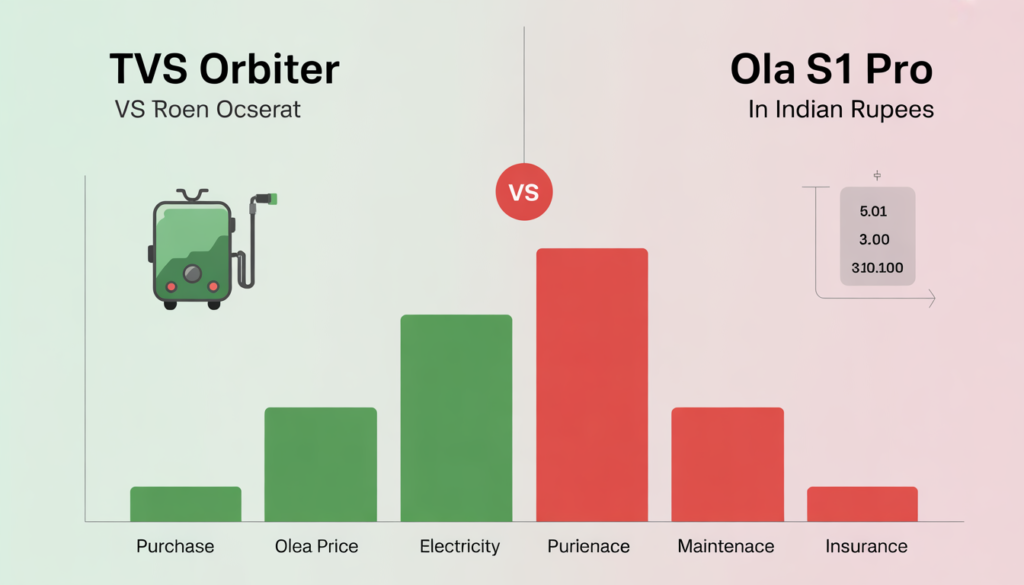
Both scooters cost roughly ₹0.15–0.20 per kilometre in electricity charges (assuming ₹7.5 per unit and average real-world consumption). That’s nearly identical. Where costs diverge is in maintenance: TVS has a massive network of 5,000+ service centres across India, while Ola is still building out its after-sales infrastructure. A routine TVS service costs ₹500–800, while Ola services can run ₹800–1,200 depending on location and availability.
₹49,999Lowest entry price for TVS Orbiter V1 with BaaS — the most affordable branded electric scooter in India
As we explore the TVS Orbiter vs Ola S1 Pro debate, it’s crucial to evaluate user experiences.
Performance & Riding Experience: Daily Commute vs Weekend Fun
Many riders report their impressions in the TVS Orbiter vs Ola S1 Pro discussions, highlighting usability.
Power and Speed
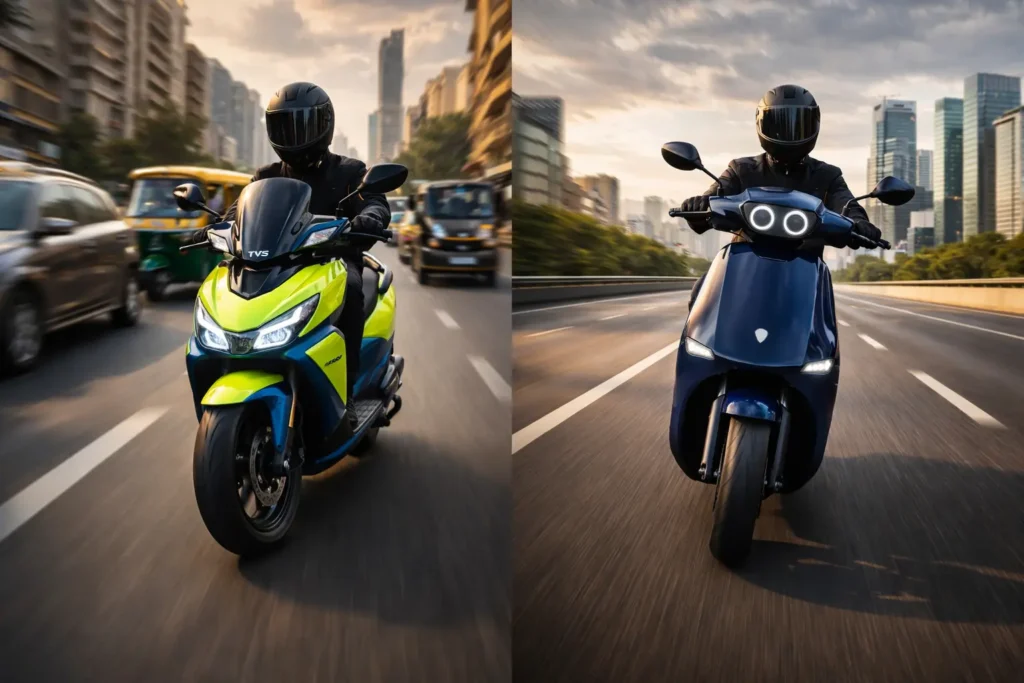
If raw performance is your priority, the Ola S1 Pro wins this category hands down. With an 11 kW peak motor output and a top speed of 117 km/h, it feels like a proper scooter that can keep up with (and sometimes outrun) 125cc petrol scooters on highways. The 0–40 km/h acceleration of 2.7 seconds is genuinely thrilling.
Choosing among the TVS Orbiter vs Ola S1 Pro options often centers on rider comfort and convenience.
The TVS Orbiter, in contrast, is intentionally mellow. Its 2.5 kW motor tops out at 68 km/h and the acceleration is adequate but never exciting. TVS designed it for calm city commuting, not for racing between traffic lights on Bangalore’s Outer Ring Road.
Ride Quality and Comfort
This is where the TVS Orbiter vs Ola S1 Pro comparison gets interesting. The Orbiter’s lighter weight (112 kg vs 125 kg) and lower seat height (760mm vs 805mm) make it significantly easier to handle in congested traffic. If you’re riding through Chandni Chowk in Delhi or the narrow lanes of Pune’s old city, the Orbiter feels more nimble and confidence-inspiring.
The Ola S1 Pro counters with better suspension travel and 12-inch wheels (vs 14″ front/12″ rear on the Orbiter, though the Orbiter’s bigger front wheel aids stability). The S1 Pro also gets disc brakes on both ends with ABS — a genuine safety advantage that the Orbiter’s drum brakes with CBS can’t match, especially in wet monsoon conditions.
Real-World Range: The Number That Actually Matters
TVS claims 158 km for the Orbiter V2, while Ola claims 176 km for the S1 Pro (3 kWh). In the real world, these numbers look quite different. Based on multiple user reviews and road tests, the Orbiter delivers 100–115 km in mixed city riding, while the S1 Pro manages 120–150 km depending on riding mode. The Ola’s advantage becomes more pronounced on highway stretches thanks to its larger motor efficiency at higher speeds.
For the average Indian commuter covering 30–50 km daily, both scooters provide more than enough range for a round trip with buffer to spare.
Features & Technology: Budget Practical vs Tech Loaded
Display and Connectivity
Ola takes this round convincingly. The S1 Pro Gen 3 features a 7-inch touchscreen TFT display that supports Ola Maps navigation, call/SMS alerts, music control, and even proximity-based unlocking. It’s genuinely smartphone-level interaction on a scooter dashboard.
The TVS Orbiter gets a 5.5-inch LCD cluster with Bluetooth connectivity via the SmartXonnect app. It offers turn-by-turn navigation, call alerts, geo-fencing, anti-theft alerts, and crash detection. It’s practical and covers the essentials, but it feels a generation behind Ola’s touchscreen experience.
Smart Features Comparison
The Ola S1 Pro packs four riding modes (Eco, Normal, Sport, and Hyper), hill-hold assist, cruise control, reverse mode, regenerative braking with multiple levels, and OTA updates through MoveOS. The S1 Pro also supports Hypercharging at Ola charging stations, which can add 50 km of range in just 15 minutes.
The TVS Orbiter offers two riding modes (Eco and City), cruise control, hill-hold assist, parking assist, and regenerative braking. It also gets OTA updates — a notable feature for a scooter in this price range. The Orbiter’s standout practical feature is the segment-leading 34-litre boot space that can fit two half-face helmets — something that daily commuters in cities like Hyderabad, Chennai, and Kolkata genuinely appreciate.
Safety Features
This is a clear Ola advantage. Disc brakes on both wheels with ABS gives the S1 Pro a significant safety edge, especially in emergency braking situations. The TVS Orbiter relies on drum brakes with CBS (Combined Braking System). For someone commuting in rain-prone cities like Mumbai or Bangalore, the Ola’s braking hardware inspires more confidence.
Build Quality & After-Sales: Where TVS’s Legacy Shines
Manufacturing Quality
TVS Motor Company has over 40 years of two-wheeler manufacturing experience, and it shows in the Orbiter’s fit and finish. Panel gaps are tight, the paint quality is consistent across colours, and the switchgear feels durable. BikeWale’s review described the Orbiter’s design as fresh and appealing with thoroughly modern elements.
In conclusion, the TVS Orbiter vs Ola S1 Pro offers distinct choices catering to different lifestyles.
Ola has improved significantly since its early days when build quality complaints were widespread, but there’s still an inconsistency that some owners report. Panel rattles, software glitches, and fit issues continue to pop up in user reviews, though the Gen 3 models have addressed many of these concerns.
Service Network: The Dealbreaker for Many
This is arguably the biggest differentiator in the TVS Orbiter vs Ola S1 Pro debate. TVS operates through 5,000+ touchpoints across India, covering everything from metro cities to small towns. If you’re in a tier-2 or tier-3 city like Raipur, Bhopal, or Coimbatore, finding a TVS service centre is never a problem.
Ola has been expanding rapidly but still trails significantly. They offer doorstep service in major cities, but in smaller towns, getting your scooter serviced can mean waiting days or even weeks. Multiple user reviews cite after-sales service as Ola’s biggest weakness.
5,000+ vs ~500TVS service touchpoints vs Ola service centres across India — a 10x difference in service accessibility
Real Owner Experiences
TVS Orbiter Owner — Karan Singh, Lucknow: “Bought the Orbiter V2 three months ago for my 18 km daily commute to Hazratganj. The scooter is dead reliable — I charge it every other night and it handles Lucknow’s roads without any rattles. Got my first service at the TVS showroom near Alambagh for just ₹600. Can’t complain.”
Ola S1 Pro Owner — Sneha Reddy, Hyderabad: “The S1 Pro is fantastic to ride — the Hyper mode is addictive and the touchscreen is genuinely useful for navigation in Hyderabad traffic. But I had a software glitch in month two that took 10 days to fix because the nearest service centre in Kukatpally was backed up. That’s the trade-off.”
By analyzing the TVS Orbiter vs Ola S1 Pro, buyers can better navigate their scooter options.
Who Should Buy Which? Our Honest Recommendation
After spending considerable time analysing every aspect of the TVS Orbiter vs Ola S1 Pro matchup, here’s our straightforward take:
Buy TVS Orbiter If…
You want a reliable, affordable daily commuter. Your commute is under 50 km. You’re a first-time EV buyer. You live in a tier-2/tier-3 city. You value hassle-free service over tech features. You want the BaaS subscription model.
Buy Ola S1 Pro If…
You want performance and tech. You need higher speed for mixed city-highway commute. You live in a metro city with Ola service centres. You value features like ABS, touchscreen, and Hyper mode. You don’t mind paying ₹15-20K more.
TVS Orbiter — Strengths and Weaknesses
✓ Strengths
- Most affordable branded EV with BaaS
- Incredible 5,000+ service network
- Lightweight and easy to handle
- 34L boot space (two helmets!)
- Low seat height, great for shorter riders
- TVS brand trust and resale value
✗ Weaknesses
- Slow — 68 km/h top speed
- No disc brakes, even as an option
- Only 2 riding modes
- LCD display vs touchscreen TFT
- Not suitable for highway use
Ola S1 Pro — Strengths and Weaknesses
✓ Strengths
- 117 km/h top speed — proper fast
- Disc + ABS braking = safer
- 7″ touchscreen with Ola Maps
- 4 riding modes + Hypercharging
- 8-year battery warranty
- Better highway range
✗ Weaknesses
- After-sales service still patchy
- Heavier at 125 kg
- Higher seat height (805mm)
- Software glitches reported
- No BaaS or subscription model
Government Subsidies and Financing for Electric Scooters in India
PM E-Drive Subsidy
Both the TVS Orbiter and Ola S1 Pro are eligible for the PM E-Drive subsidy (which replaced FAME II in October 2024). The subsidy amount depends on battery capacity and vehicle price, but typically ranges from ₹5,000 to ₹10,000 for electric scooters. Most ex-showroom prices you see already include this subsidy. Additionally, states like Gujarat, Delhi, Maharashtra, and Rajasthan offer their own EV subsidies ranging from ₹5,000 to ₹30,000.
EMI and Financing Options
TVS offers financing through multiple banking partners including SBI, HDFC, and ICICI with EMIs starting as low as ₹2,500/month for the Orbiter. Ola partners with similar banks and also offers its own financing platform. Both scooters are eligible for green vehicle loans that come with 0.25–0.50% lower interest rates compared to standard vehicle loans.
TVS’s BaaS model is a game-changer for budget buyers. A monthly battery subscription of ₹862 combined with a vehicle EMI of approximately ₹1,500–2,000 means you can start riding the Orbiter V1 for under ₹3,000 per month — less than what most people spend on petrol for their Honda Activa.
Final Verdict: TVS Orbiter vs Ola S1 Pro — Which Is Better?
There’s no single “better” scooter here — it depends entirely on what you prioritise. The TVS Orbiter vs Ola S1 Pro comparison reveals two fundamentally different philosophies.
The TVS Orbiter is the sensible, reliable choice. It’s the electric equivalent of a Honda Activa — it won’t excite you, but it will never let you down. For a college student in Pune, a delivery executive in Jaipur, or a homemaker in Chennai who needs a simple, affordable, and dependable daily runabout, the Orbiter is difficult to beat. The BaaS model makes it accessible to almost everyone.
The Ola S1 Pro is the ambitious, tech-forward choice. It’s faster, smarter, and more capable on paper. For a young professional in Bangalore, a freelancer in Delhi NCR, or anyone who wants their scooter to feel like a gadget as much as a vehicle, the S1 Pro delivers an experience the Orbiter simply can’t match. The ABS braking alone is worth the premium if safety is non-negotiable.
Our advice? Test ride both at your nearest dealership. The Orbiter will charm you with its simplicity; the S1 Pro will impress you with its tech. Your daily commute, your city, and your budget will tell you which TVS Orbiter vs Ola S1 Pro verdict is right for you.
Ready to Go Electric?
Visit your nearest TVS or Ola showroom for a test ride. Both brands offer home test drives in most metro cities. Compare the on-road prices in your city — dealer discounts can vary by ₹5,000–15,000 depending on the season.
The TVS Orbiter vs Ola S1 Pro market reflects diverse user needs and preferences.
Ultimately, the TVS Orbiter vs Ola S1 Pro decision is shaped by individual preferences and riding requirements.
The TVS Orbiter vs Ola S1 Pro debate often focuses on the innovative features each model brings to the table.
In summary, whether you prefer the TVS Orbiter vs Ola S1 Pro, both scooters have unique advantages.
Visit a showroom and experience the TVS Orbiter vs Ola S1 Pro firsthand to make an informed choice.
The TVS Orbiter vs Ola S1 Pro will remain a popular topic as electric scooters continue to evolve.
Must Know: Electric Scooter With Best Range Under 1 Lakh India 2026: The Only Guide You Need